 WAYMORE TOOLS
Importing Power Tools from China to Germany: Duties, Tariffs, Customs Clearance and Logistics Guide
By Waymore Tools — Your Trusted Partner in Professional Cleaning Solutions
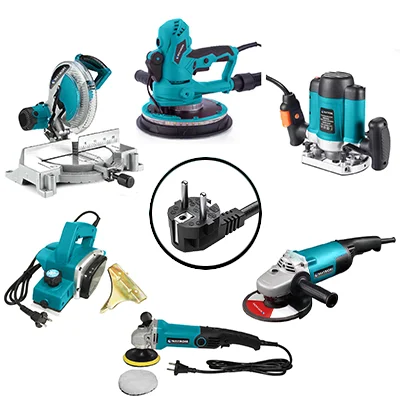
Germany is Europe's largest power tool market — a country where tradespeople buy roughly EUR 3.5-4 billion of power tools annually through a dense network of specialized wholesalers, DIY chains (Bauhaus, Hornbach, Obi), and online platforms. For Chinese manufacturers and foreign distributors, Germany is also the gateway market: land your products in Germany and the rest of the EU becomes reachable with zero additional border friction. But the path in is not free, and the importer who does not understand duties, VAT mechanics, customs clearance, and EU compliance will see margins evaporate at the border.
This guide is written for B2B importers — distributors planning their first German program, e-commerce sellers expanding from Amazon.de, and brand owners evaluating direct import from Chinese factories. We cover HS classification and duty rates, the VAT system in practice, customs clearance step by step, logistics options, and the compliance documentation German customs and market surveillance actually check. If you are comparing factory options, our wholesale power tools catalog shows the product range a German program would typically start with.
HS Classification and Duty Rates for Power Tools
Everything begins with the correct HS code, because the duty rate, the VAT base, and even the import documents depend on it. The main power tool classifications under the EU's Combined Nomenclature (CN) are:
- 8467.21 — Drills of all kinds (corded and cordless), including hammer drills.
- 8467.22 — Saws (circular saws, jigsaws, reciprocating saws).
- 8467.29 — Other tools with self-contained motor (angle grinders, sanders, planers, routers, nailers, blowers, etc.).
- 8467.91 / 8467.92 / 8467.99 — Parts for the above.
- 8508 — Vacuum cleaners (relevant for dust extractors and wet/dry vacs).
- 8509 / 8510 — Some small electromechanical appliances.
The standard MFN (most-favored-nation) duty rate for Chinese imports in chapter 8467 is 2.7% for the tools themselves, with parts at 2.7% as well. Some categories differ — for example, certain compressors under 8414 and batteries under 8507 have their own rates. Anti-dumping duties have historically applied to specific Chinese products (e.g., some bicycle and solar products), but power tools in chapter 8467 are not currently subject to anti-dumping measures — still, verify the current status with a customs agent before every program, because trade measures can change quickly. The China-EU trade relationship is stable for this category, and 2.7% remains the planning figure for tools.
VAT: The Cash-Flow Mechanics That Trip Up Importers
German import VAT is 19% (7% reduced rate does not apply to power tools). The mechanics are simple but the cash-flow impact is real: VAT is payable at customs clearance on the customs value — which is the CIF value (goods + insurance + freight) plus duty. In practice, on a EUR 50,000 CIF container, you pay roughly EUR 1,350 duty and EUR 9,750 VAT at clearance. The VAT is then reclaimable on your next VAT return (Vorsteuerabzug) if you are a VAT-registered business, but the cash is tied up for weeks. Mitigations:
- VAT deferral (Aufschub) — apply to your Hauptzollamt for deferred payment; with approval, import VAT is settled monthly instead of per shipment, preserving working capital.
- Customs warehouse or bonded warehouse — store goods duty- and VAT-deferred until they leave for EU customers; ideal for distribution hubs.
- Inward processing — if you re-export, duty and VAT can be suspended entirely; relevant for traders using Germany as a hub for non-EU markets.
- AEO status — Authorised Economic Operator certification simplifies clearance and enables simplifications like reduced data sets and faster release.
One common mistake: using a freight forwarder's "door-to-door with DDP" service without understanding how the duty/VAT was calculated. You remain the importer of record unless contractually arranged otherwise; always obtain the customs entry documents and verify the declared value matches your commercial invoice.
Comparison Table: Logistics Options from China to Germany
| Option | Transit Time | Cost per 40'HC / CBM | Best For |
|---|---|---|---|
| Sea freight (Ningbo/Shanghai → Hamburg/Bremerhaven) | 28-38 days | USD 2,000-3,200 per 40'HC | Volume programs, low unit cost |
| China-Europe rail (via Duisburg/Hamburg) | 18-24 days | USD 3,500-5,500 per 40'HC | Mid-volume, time-sensitive stock |
| Air freight | 3-7 days | USD 4.5-7.5 per kg | Urgent top-ups, samples, new SKU tests |
| Consolidated LCL sea freight | 30-40 days | USD 90-150 per CBM | First pilot orders under 15 CBM |
Most of our German customers run a hybrid: sea freight for the core program with rail for seasonal top-ups and air for urgent reorders. Battery-powered tools have special rules — lithium batteries are Class 9 dangerous goods for air freight, and many airlines restrict them; for battery tools, sea or rail is the practical default. Confirm your factory's battery documentation (UN 38.3, MSDS, transport labels) before booking anything.
Customs Clearance: Step by Step
Clearing a power tool shipment in Germany is routine when the paperwork is right. The critical documents are:
- Commercial invoice — with accurate unit values; German customs cross-checks values against databases and can reject implausibly low declarations.
- Packing list — per-carton contents, weights, and dimensions.
- Bill of lading / airway bill.
- CE Declaration of Conformity and test reports — customs and market surveillance (Zoll and Marktüberwachung) increasingly request compliance files at the border; keep them ready for every model.
- EU EORI number — you need an EORI to clear customs in the EU (obtained free from the Bundeszentralamt für Steuern if you are German-registered).
- Power of attorney for your customs agent.
The clearance itself runs through ATLAS (Germany's electronic customs system), usually handled by your broker in 1-3 days for routine shipments. Plan for a documentation lead time of 3-5 working days before the vessel arrives, and pre-submit the compliance files if you expect any scrutiny. Border inspections (Warenkontrolle) happen randomly; when they do, missing CE files or wrong labeling can hold a container for weeks — a costly lesson our customers avoid by keeping the full compliance package on file with their agent.
Choosing Your German Sales Channel
Where you sell in Germany shapes what you import and how you price it. The market splits into four channels with very different characteristics. Specialist wholesalers (Fachgroßhandel) serve trade customers through delivery networks and expect full compliance files, German manuals, and reliable supply — they are the highest-volume channel for professional tools and the hardest to enter without a track record. DIY chains (Bauhaus, Hornbach, Obi, Toom) buy through central purchasing with strict supplier onboarding, private-label programs of their own, and demanding delivery terms; they are powerful but slow to onboard. E-commerce (Amazon.de, eBay, Otto, and the chains' online shops) is the fastest entry: marketplaces accept new brands quickly, and Amazon FBA lets you test demand with small inventory. Regional hardware dealers (Baumärkte and specialist stores) are the most accessible for mid-sized importers — hundreds of independent dealers across Germany will test a new brand with a modest shelf commitment.
Pricing power differs by channel too. The DIY chains squeeze margins to 10-15% at wholesale level but move enormous volume; e-commerce allows 35-50% gross margins but carries marketing and return costs; specialist wholesalers sit in between. Most successful importers enter through e-commerce and regional dealers, build a sales history, then approach the national chains with data. Whichever channel you choose first, remember that German buyers expect long warranty terms (3 years is now common) and reliable spare parts supply — factor both into your pricing and your factory contract from day one.
EU Compliance: What German Market Surveillance Actually Checks
Germany enforces product safety seriously, and power tools are a priority category. The requirements for any tool placed on the German market:
- CE marking under the Machinery Directive (2006/42/EC), Low Voltage Directive (2014/35/EU), EMC Directive (2014/30/EU), and RoHS (2011/65/EU).
- German-language manual — mandatory in practice; the EU requires instructions in the member state's official language, and German retailers demand them.
- Model-specific Declaration of Conformity naming your company as the responsible party — as importer you are legally the manufacturer in the EU.
- Technical file available on request within days, including EN 62841 / EN 60745 test reports from accredited labs.
- Proper labeling: CE mark, model number, power ratings, and the importer's name and address on the product or packaging (required by the GPSR — General Product Safety Regulation, which applies from December 2024 and strengthens these obligations).
- WEEE and battery registration — electrical tools must be registered with the Stiftung Elektro-Altgeräte Register (EAR) under the ElektroG, and batteries under the BattG. This is a legal requirement for selling in Germany that many first-time importers miss.
The GPSR deserves emphasis: it requires you to designate a responsible person established in the EU, keep a technical file, and ensure traceability. A competent factory partner — like Waymore Tools — supplies the full compliance package, re-issues files under your brand for private label, and supports market surveillance inquiries. For UK-bound goods, note that the rules differ post-Brexit; see our UKCA vs CE guide.
Landed Cost Model: The Numbers That Matter
Here is a realistic landed cost build for a 40'HC container of power tools (mix of drills and angle grinders, CIF value EUR 45,000):
| Cost Component | Amount (EUR) | Notes |
|---|---|---|
| CIF value (goods + freight + insurance) | 45,000 | Ex-works + sea freight + insurance |
| Import duty (2.7%) | 1,215 | On CIF value, HS 8467 |
| Customs brokerage & handling | 350-600 | Agent fees, terminal handling, trucking |
| Import VAT (19%) | 8,781 | On CIF + duty; reclaimable if VAT-registered |
| Compliance & registration (annual) | 1,500-4,000 | EAR registration, battery reg., authorized rep. |
| Total landed (excl. reclaimable VAT) | 47,100-48,000 | ~4.7-6.7% above CIF |
Planning envelope for German programs: 2.7% duty + 19% VAT (reclaimable) + 4-7% freight and handling + compliance overhead. Compare this to domestic wholesale price levels and you will see the structural advantage of direct import — which is why Germany's own wholesalers have been among the most aggressive importers of Chinese power tools for two decades.
Frequently Asked Questions (FAQ)
What is the import duty on power tools from China to Germany?
2.7% for most tools under HS chapter 8467 (drills, saws, grinders, nailers). Parts are also 2.7%. Verify current rates and any trade measures with your customs agent, as classifications can shift.
Do I need a CE mark to import power tools into Germany?
Yes. CE marking under the Machinery, Low Voltage, EMC, and RoHS directives is mandatory, with a model-specific Declaration of Conformity and German-language manual. Since December 2024, the GPSR also requires a responsible person in the EU and traceability documentation.
Is import VAT reclaimable in Germany?
Yes — if you are a VAT-registered German business, import VAT paid at clearance is reclaimable as input VAT on your return. You can also apply for VAT deferral to preserve working capital, or use bonded warehousing to defer payment entirely until goods leave the warehouse.
Can I ship battery power tools by air from China?
Only with proper Class 9 dangerous goods compliance: UN 38.3 test reports, MSDS, and airline approval. Many carriers restrict lithium batteries, so sea or rail freight is the practical default for battery tool volumes.
Do I need to register before selling power tools in Germany?
Yes. Electrical tools require registration with the Stiftung EAR under the ElektroG (WEEE), batteries under the BattG, and under GPSR you must designate a responsible person in the EU. Skipping these registrations risks fines and market withdrawal orders.
Conclusion: A Clear Path into the German Market
Importing power tools from China to Germany is a well-defined process: classify correctly (2.7% duty under chapter 8467), manage VAT cash flow with deferral or bonded warehousing, clear through ATLAS with complete documents, and — above all — treat EU compliance as a market-entry requirement, not an afterthought. Importers who execute on these four fronts enjoy a structural cost advantage that German wholesalers have proven works for decades.
Waymore Tools has shipped to German and EU importers for 15+ years, with CE documentation, German manuals, OEM/private-label support, and EAR/battery registration assistance built into our service. Start with our wholesale catalog or the OEM/ODM service page, and send us your target retail prices — we will prepare the factory configuration, compliance files, and shipping plan for your German program.
💼 Stock the Best — At the Right Price
Whether you need one model or a full lineup, our factory can supply the exact specifications your customers demand. ISO 9001 certified, with 15+ years of OEM experience.
MOQ: 100 units per model · Custom branding available · Door-to-door shipping