 WAYMORE TOOLS
How to Choose the Right Pressure Washer in United States Wholesale Sourcing Guide
By Waymore Tools — Your Trusted Partner in Professional Cleaning Solutions
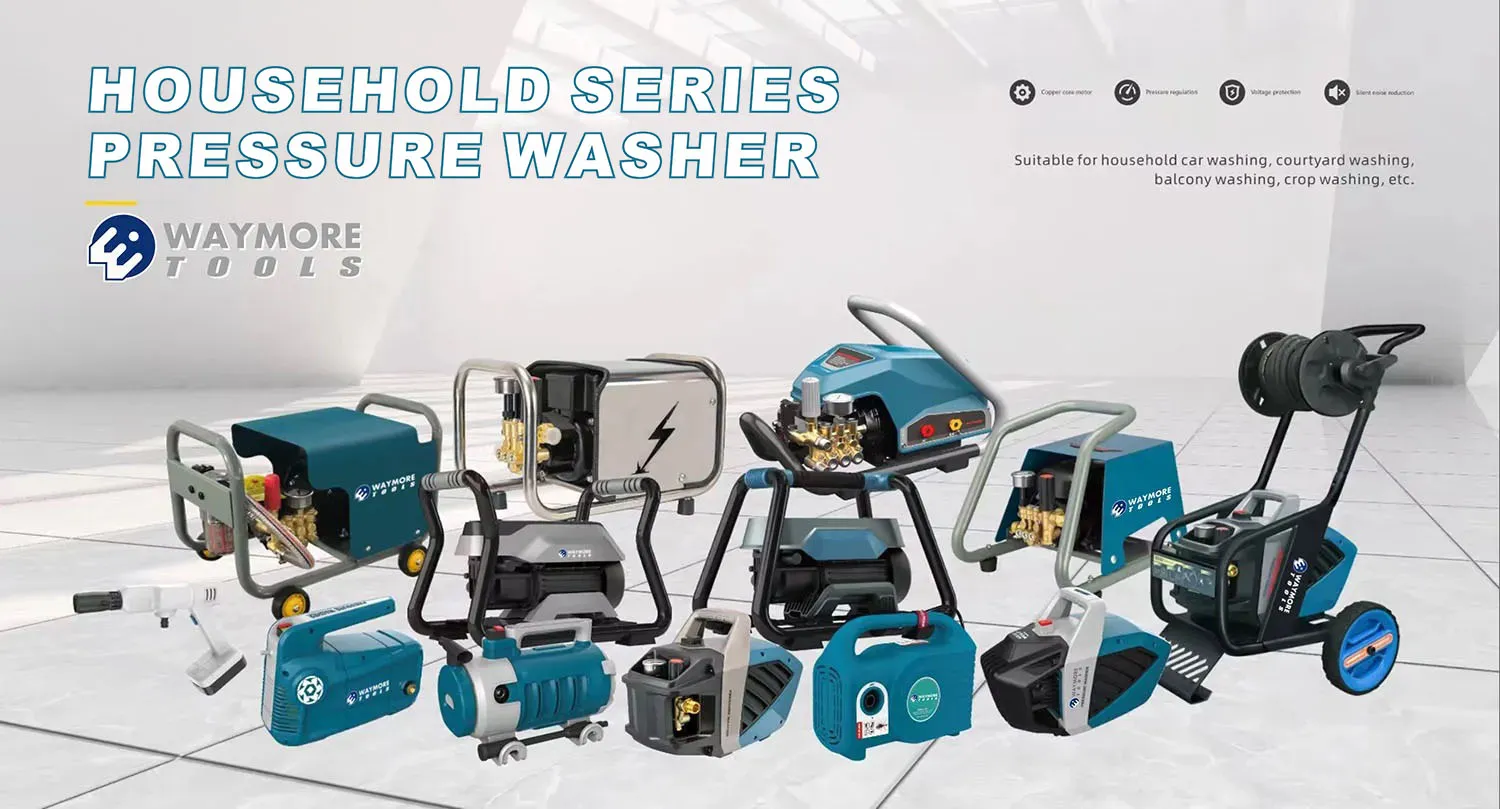
Pressure washers are one of the highest-growth power equipment categories in the United States, with sales concentrated in spring and summer and strong attachment rates for accessories. For wholesale buyers, importers, and distributors, the category offers healthy margins and dependable seasonal velocity — but only if the product mix is right. The US market splits sharply between electric pressure washers (compact, affordable, DIY-friendly) and gas pressure washers (powerful, mobile, professional-grade), and within each side there are pump tiers, PSI/GPM combinations, and certification requirements that separate winning SKUs from return magnets. This guide gives US-focused buyers a spec-first framework for choosing the right pressure washer — and for selecting a factory that can deliver compliant, sellable machines at wholesale prices.
US Pressure Washer Market Structure: Know the Two Demand Pools
Understanding who actually buys pressure washers in the US is the foundation of every sourcing decision:
- Homeowner pool (the volume engine): Electric units in the 1,400–2,000 PSI range dominate big-box and e-commerce sales. Buyers use them for driveways, decks, siding, and cars. Price sensitivity is extreme; brand trust (or a strong private label with good reviews) decides the sale.
- Prosumer and contractor pool (the margin engine): Gas units from 2,700–4,000 PSI serve painters, deck builders, fleet washers, and property managers. These buyers care about pump durability, GPM (flow), and parts availability more than price.
- Industrial and rental: Skid and trailer-mounted units above 4,000 PSI are project equipment sold through specialty distributors — a smaller but very stable B2B channel.
For most importers, the profitable core is electric for volume plus mid-range gas for margin, with accessory bundles attached to every sale. Distributors who stock both pools capture spring traffic and summer contractor demand with the same warehouse.
The Two Numbers That Define Every Pressure Washer: PSI and GPM
US buyers and retailers quote pressure washers by PSI (pressure) and GPM (flow). Understanding how they interact — and how factories spec them — is critical:
PSI: Cleaning Force
PSI (pounds per square inch) determines how aggressively the machine blasts surfaces. In the US market: 1,300–1,600 PSI handles cars and light patio cleaning; 1,800–2,300 PSI covers driveways and decks; 2,700+ PSI is for heavy staining, paint prep, and commercial surfaces. Note that cheap machines often inflate PSI on paper — a 1,800 PSI unit with a weak pump may outperform a 2,000 PSI unit with an undersized motor in real use.
GPM: Cleaning Speed
GPM (gallons per minute) controls how fast you clean. The cleaning power formula used by professionals is PSI × GPM = cleaning units. A machine with 2,000 PSI and 1.2 GPM cleans slower than one with 1,700 PSI and 1.6 GPM. For US retail, 1.2–1.6 GPM is standard on electric units; gas units run 2.0–2.5 GPM.
What to Request on the Spec Sheet
Always ask the factory for certified PSI and GPM test values, not marketing numbers. Reputable factories test each production batch and can show test bench data. If a quotation lists only PSI, request the GPM and the pump model before comparing prices.
Electric vs. Gas: Building the US Inventory Split
This comparison table is the planning tool most US wholesalers use to allocate their container budget:
| Factor | Electric Pressure Washer | Gas Pressure Washer |
|---|---|---|
| Typical FOB price (China, 2026) | $28–$65 | $85–$180 |
| Typical PSI / GPM | 1,400–2,000 PSI / 1.2–1.6 GPM | 2,700–3,400 PSI / 2.2–2.5 GPM |
| Power source | 120V, 13–15A circuit | Gas engine (usually 196cc–223cc) |
| Certification complexity | UL/ETL electrical listing | EPA/CARB engine compliance + UL |
| Logistics | Standard cargo, lighter units | Heavier, spill/engine documentation |
| Seasonality | Spring–fall, gift-able | Year-round contractor demand |
| Margin profile | Lower unit margin, high volume | Higher margin, stronger brand loyalty |
A common and effective US split is 60–70% electric, 30–40% gas. Electric SKUs build volume and reviews; gas SKUs build margin and B2B relationships. Waymore's pressure washer range covers both sides, with EPA/CARB-compliant gas models and UL-listed electric models configured for the US market.
Pump Tiers and the Warranty Reality Check
The pump is the heart of a pressure washer, and it is the #1 warranty claim point in the US. Buyers should plan around three pump tiers:
| Pump Tier | Typical Applications | Expected Life (light use) | FOB Cost Impact |
|---|---|---|---|
| Entry axial pump (plastic valves) | 1,400–1,700 PSI electric, occasional use | 1–3 seasons | Baseline |
| Mid axial pump (brass head, metal valves) | 1,800–2,300 PSI electric/gas entry | 3–5 seasons | +$8–$15 |
| Triplex plunger pump (professional) | 2,700–4,000 PSI gas, daily use | 5–10 years with service | +$30–$60 |
Wholesale rule of thumb: never put an entry axial pump in a gas machine. Gas engines outlast entry pumps by years, and the mismatch produces the warranty claims that ruin private-label reputations. For gas SKUs, insist on at least a brass-head axial or a true triplex pump, and keep spare pump kits in your warehouse for fast swap-outs.
Certification and Compliance for US Market Pressure Washers
The US compliance stack for pressure washers is heavier than for most power tools. Plan for these five items:
- UL 62841 or ETL listing (electric models): Required by big-box retailers and most e-commerce marketplaces. Confirm the factory holds an active file, and that the exact model you import is covered.
- EPA / CARB compliance (gas models): Gas engines sold in the US must meet EPA emission standards; California adds CARB. Confirm the engine manufacturer's EPA/CARB certificates cover your exact engine model and year of manufacture.
- 120V / 60Hz configuration: Electric units must be built for US voltage with the correct plug. A factory shipping 230V stock into US channels will fail inspection.
- Prop 65 (California): Pressure washers and their hoses may trigger Prop 65 labeling for lead or phthalates. See our Prop 65 compliance guide for labeling requirements.
- Import documentation: Gas pressure washers require careful HTS classification and may need engine-displacement declarations; work with a customs broker who handles small-engine imports.
Ask factories for the actual certificate PDFs and test reports, and verify the certificate covers your SKU number. A factory that hesitates on documentation is signaling problems downstream — this is one area where our certification guide can save you from costly surprises.
Wholesale Price Benchmarks for US-Market Pressure Washers
Use these FOB China benchmarks (2026, planning basis) to evaluate quotations. Prices assume container quantities of 500–2,000 units with retail packaging:
| Configuration | Typical FOB Price | Typical MOQ |
|---|---|---|
| Electric 1,600 PSI, 1.2 GPM, entry pump, 30 ft hose | $28–$38 | 500 pcs |
| Electric 2,000 PSI, 1.6 GPM, brass pump, accessories | $45–$65 | 500 pcs |
| Gas 2,700 PSI, 2.2 GPM, 196cc engine, triplex pump | $95–$135 | 300 pcs |
| Gas 3,400 PSI, 2.5 GPM, 223cc engine, pro triplex | $140–$180 | 300 pcs |
| Accessory bundle (wand, nozzles, foam cannon, hose) | $6–$12 | 1,000 sets |
Prices 15–20% below these bands usually signal weaker pumps, thinner hose, or missing certifications. When a quote looks too good, check the pump brand, hose rating, and certificate coverage first.
Seasonality and Inventory Timing
US pressure washer demand peaks March–August, with a secondary spike around Black Friday and holiday gifting. Practical planning rules:
- Place spring-stock orders September–November so containers arrive by January–February.
- Order gas units year-round — contractor demand is steadier and less promotional.
- Carry a spare parts kit (pumps, hoses, triggers, nozzles) for at least 2% of units sold; parts margins are 40–60% and keep your brand off the complaint lists.
- Bundle accessories at every price point — a $10 accessory set turns a $50 unit into a $65 average sale.
For a deeper dive into demand cycles across power tool categories, see our seasonal inventory planning guide.
Choosing Hose, Lance, and Nozzle Specs That Survive US Use
The machine is only half the product — the hose, lance, and nozzle package determines whether US customers keep your machine or return it. Wholesale buyers should spec these components deliberately:
- Hose length and rating: US buyers expect a minimum 20–25 ft hose on electric units and 25–35 ft on gas units. The hose must be rated above the machine's working pressure (e.g., a 2,000 PSI machine needs a hose rated at least 3,000 PSI burst-proof). Undersized hoses are a leading cause of bursts and warranty claims.
- Quick-connect fittings: Standard 3/8-inch quick-connect couplings are the US norm. If your factory ships a proprietary fitting, every accessory purchase becomes a frustration point. Insist on industry-standard quick connects.
- Nozzle set: A 4-in-1 or 5-in-1 quick-change nozzle set (0°, 15°, 25°, 40°, soap) is now the expected baseline. The soap nozzle must be included — detergent application is how most homeowners use the machine.
- Trigger gun ergonomics: A comfortable trigger with a locking safety latch and a 3+ second release delay reduces fatigue and accidental spray injuries — a safety and liability issue worth specifying carefully.
- Foam cannon compatibility: The foam cannon is the most popular US accessory. Standard thread compatibility (M22-14) lets customers buy third-party cannons; proprietary threads kill accessory sales.
Component specs are where cheap factories cut corners, and where your QC inspection should focus. During the pre-shipment inspection, pressure-test a sample of hoses and check every quick-connect for leak-free operation. These components are cheap to upgrade at the factory and expensive to fix after a container arrives.
Transport and Storage Considerations for Importers
Pressure washers are bulky and mostly plastic — two facts that make transport and storage planning more important than for most power tool categories:
| Consideration | Why It Matters | Best Practice |
|---|---|---|
| Cube efficiency | Pressure washers consume container space quickly; per-unit freight is higher than for compact tools | Spec packaging to stack; consider knock-down designs (separate handle/accessory trays) |
| Hose packing | Coiled hoses can kink and deform in transit | Require protective wrap and a hose retainer inside the carton |
| Freeze risk in storage | Water left in pumps freezes and cracks the pump head | Spec freeze-protected pump heads or ship dry; store indoors above freezing |
| Gas engine handling | Engines ship dry but need clear labeling and safe packaging | Confirm fuel is drained at the factory and engines are crated or well-cushioned |
| Warranty parts storage | Pumps, hoses, and triggers are the top failure parts | Stock a parts kit for at least 2% of units sold; parts margins run 40–60% |
Wholesalers who plan cube efficiency and freeze protection at the spec stage avoid the two most common pressure-washer importing surprises: freight costs 20% higher than expected, and a warehouse full of cracked pumps after the first cold snap.
FAQ: US Pressure Washer Sourcing
Do I need UL certification for electric pressure washers sold online?
Legally, products must meet safety standards, but Amazon and major marketplaces require proof of compliance for this category, and big-box retail demands UL/ETL. Plan for UL-listed electric SKUs from the start — it protects your listings and your liability.
Can I import gas pressure washers into California?
Yes, but the engine must hold a current CARB executive order for the model year. California enforces this at point of sale, and marketplaces block non-compliant listings. Confirm CARB coverage before committing to West Coast distribution.
What is the realistic MOQ for private-label pressure washers?
OEM (logo + packaging on existing models) starts at 500 units per SKU; ODM with custom molds or colors starts around 2,000–3,000 units. Waymore Tools offers OEM from 500 units with US-market certification support.
What causes most US warranty claims on imported washers?
Pump failure (often from running without water), hose bursts, and trigger gun leaks. Mitigate with clear priming instructions, quality hose (rated above working pressure), and a parts program that lets customers self-serve.
Your Sourcing Action Plan
To bring it together, here is the sequence successful US importers follow:
- Step 1: Choose your mix — electric volume line (1,600–2,000 PSI) plus gas margin line (2,700–3,400 PSI).
- Step 2: Fix pump tiers per SKU and request certified PSI/GPM test data with every quotation.
- Step 3: Verify UL/ETL, EPA/CARB, and Prop 65 documentation — PDFs, not photos.
- Step 4: Benchmark FOB prices, then audit the factory's test bench and hose/pump suppliers.
- Step 5: Build the accessory bundle and spare parts program into your first PO.
- Step 6: Time your first container for January–February arrival, with a reorder placed before spring sell-through.
Pressure washers reward disciplined buyers. Get the PSI/GPM spec, the pump tier, and the certification package right, and the category will reward you with two decades of dependable spring volume.
💼 Stock the Best — At the Right Price
Whether you need one model or a full lineup, our factory can supply the exact specifications your customers demand. ISO 9001 certified, with 15+ years of OEM experience.
MOQ: 100 units per model · Custom branding available · Door-to-door shipping