 WAYMORE TOOLS
Complete Power Tool Kit for Bike Shop Startup: Wholesale Sourcing Guide
By Waymore Tools — Your Trusted Partner in Professional Cleaning Solutions
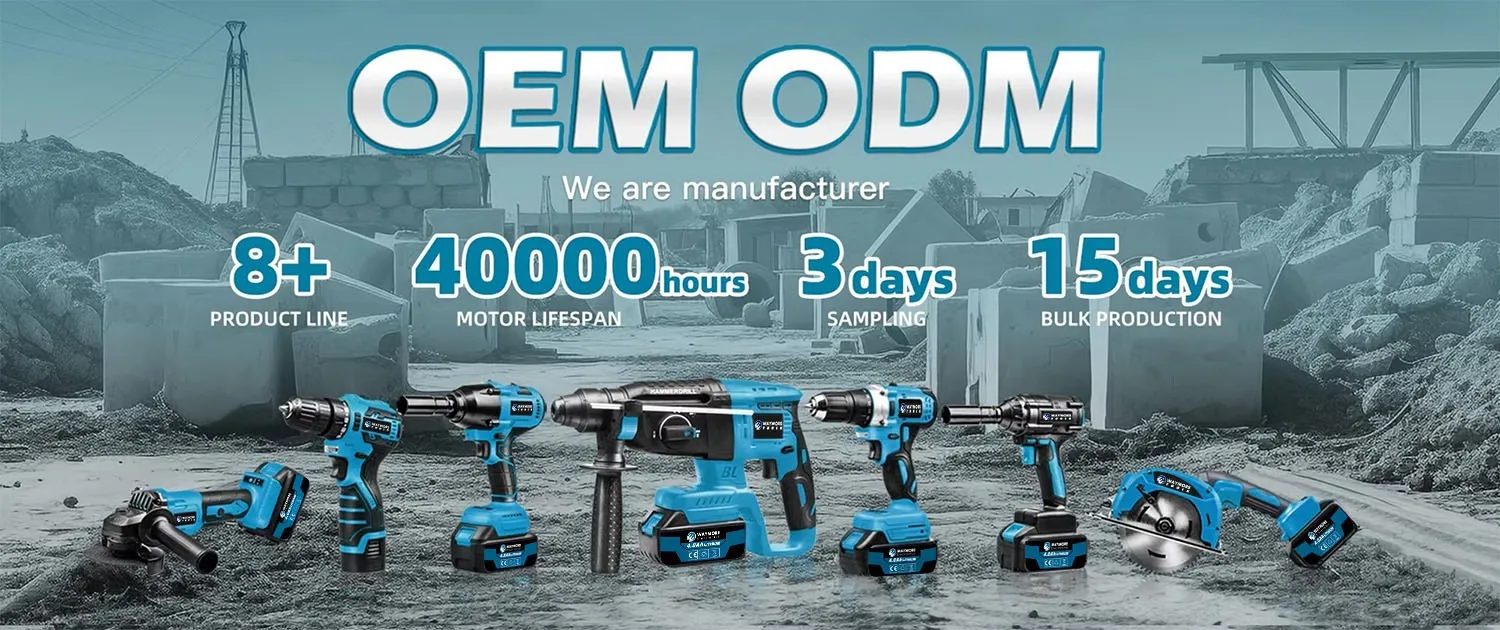
Starting a bicycle shop — whether a retail storefront, a mobile repair service, or an e-bike assembly workshop — requires a well-planned investment in tools. For wholesale buyers, distributors and shop owners sourcing from China, the opportunity is to assemble a complete power tool kit that covers every job in a bike workshop: frame work, wheel truing, drivetrain service, brake and cable installation, and e-bike component fitting. This guide covers the tools you actually need, realistic specifications, budget planning, and how to source the whole kit efficiently from a single factory partner like Waymore Tools.
The bicycle market is growing faster than most distributors realize. The global bicycle market is estimated at over USD 60 billion, and e-bikes are the fastest-growing segment, with European e-bike sales surpassing regular bike sales in several major markets. Every one of those bikes needs maintenance, and every service workshop needs a standardized tool kit. That creates a repeatable wholesale opportunity: bike shop tool kits sold as bundled packages to retailers, service networks and franchise chains.
What a Bike Shop Actually Needs: The Job-Based Tool List
Rather than buying a random assortment of tools, build the kit around the jobs a bike workshop performs daily. Each job category maps to specific power tools and accessories.
1. Frame and Fork Work
Frame repairs, headset installation and fork service require controlled torque. A cordless impact wrench or torque-rated driver is essential, plus a bench grinder or angle grinder for cutting and cleaning stubborn parts. For cutting steerer tubes and seat posts, a compact angle grinder with a cutting disc is the industry standard.
2. Drilling and Threading
Water bottle cage mounts, rack mounts, fender mounts and frame modifications all require precise drilling. A cordless drill driver with a full bit set is the most-used tool in any bike workshop. A compact drill with adjustable clutch prevents over-torquing into carbon frames.
3. Wheel and Tire Work
Tire changes, tubeless setup and wheel truing need an air source. A compact air blower or compressor combo handles inflation and cleaning, while a bench-mounted truing stand covers alignment. For shops that service tubeless tires, a high-volume inflator is a must-have.
4. Cleaning and Maintenance
Chain cleaning, cassette degreasing and frame detailing consume more consumables than any other job. A parts washer, an air blower for drying, and a light-duty pressure washer for shop floor cleaning round out the kit.
5. E-Bike Specific Work
E-bikes add torque sensors, display units, battery mounts and motor connectors. The kit needs precision screwdrivers, a digital torque wrench and a heat gun for shrink tubing and connector work. A comprehensive tool set with hex, Torx and security bits covers 80% of e-bike fasteners.
| Work Area | Essential Power Tools | Recommended Spec | Budget Range (Wholesale) |
|---|---|---|---|
| Frame & fork | Impact wrench, angle grinder | 18V brushless, 125 mm grinder | USD 60–140 |
| Drilling & threading | Cordless drill driver, bit set | 18V, 2-speed, 50 N·m | USD 40–90 |
| Wheels & tires | Air blower, compressor, truing stand | 20–30 L/min, 8 bar | USD 50–150 |
| Cleaning | Parts washer, pressure washer | 110–160 bar, 6–8 L/min | USD 80–220 |
| E-bike service | Torque wrench, heat gun, precision set | 2–25 N·m digital | USD 40–120 |
Budget Planning: From USD 300 Starter Kit to USD 1,500 Pro Shop
Bike shop tool budgets vary wildly depending on service level. A home-based mobile mechanic needs less than a full retail workshop. Wholesale buyers typically offer two or three kit tiers:
- Starter kit (USD 300–500 wholesale): cordless drill driver, bit set, hand tools, air blower, tire levers, work stand. Targets mobile mechanics and garage-based startups.
- Standard kit (USD 700–1,000 wholesale): adds angle grinder, impact wrench, torque wrench, parts washer, truing stand. Targets full-service retail shops.
- Pro kit (USD 1,300–1,800 wholesale): adds pressure washer, compressor, heat gun, digital torque tools, e-bike diagnostic kit. Targets e-bike specialist shops and service chains.
Bundling is where the wholesale margin lives. A factory can package the standard kit for roughly 15–25% less than the sum of individually priced tools, because packaging, accessories and logistics are shared. Distributors who sell complete kits enjoy higher basket value, faster inventory turns and fewer stock-keeping units to manage.
Market Demand: Why Bike Shop Kits Sell Year-Round
Unlike seasonal power tool categories, bike shop tooling has a surprisingly stable demand curve. The European market alone sees millions of new bikes and e-bikes sold annually, and every one of them generates recurring service demand. E-bike sales in Germany, the Netherlands and France have grown at double-digit rates for several consecutive years, and regulatory requirements in several countries now mandate periodic e-bike inspections, which shops must perform with calibrated torque tools.
From a wholesale perspective, this creates two revenue streams. The first is the initial kit sale to a new shop — a one-time purchase that typically lands between USD 800 and USD 2,500 retail. The second, more valuable stream is consumables and accessory re-orders: bits, blades, degreaser, tubes and fasteners that shops buy every quarter. Distributors who lock in a shop with the right kit win the consumables relationship by default, and that recurring revenue is where long-term B2B profitability lives.
Choosing the Right Battery Platform for a Bike Shop
Bike shops are compact workspaces, and almost every modern shop tool now runs on batteries. The smart sourcing decision is to standardize on a single battery platform across the kit. A 18V or 20V platform covering the drill driver, impact wrench, angle grinder and air blower means the shop needs only one charger ecosystem and can share batteries between tools.
For e-bike work, torque precision matters more than raw power. Look for drill drivers with adjustable clutches (15–20 positions) and brushless motors, which hold consistent speed under load — critical when driving fasteners into carbon or aluminum components. Digital torque wrenches with 2–25 N·m range cover nearly every fastener on a modern bike, from stem bolts to derailleur hangers.
Air, Cleaning and Shop Infrastructure Tools
Many bike shop startups underestimate how much of their work is cleaning and inflation rather than drilling. Tire inflation at 6–8 bar, tubeless seating at high volume, chain degreasing and frame detailing are daily jobs. A quality air blower doubles as a compressor for inflation, and a parts washer with biodegradable solvent handles drivetrain cleaning without hazardous waste disposal.
A compact pressure washer at 110–160 bar serves both shop floor cleaning and customer bike wash services — a revenue generator that pays for itself. For shops in humid climates, compressed air drying after washing prevents corrosion on chains and cassettes, which is a direct warranty-cost saver.
Sourcing the Complete Kit: One Factory vs. Multiple Suppliers
The most common mistake in bike shop kit sourcing is buying tools from five different suppliers and paying five freight minimums, five payment terms and five quality curves. A single factory with a broad catalog — drills, grinders, wrenches, blowers, compressors, pressure washers and tool sets — can consolidate the entire kit into one container, one invoice and one quality standard.
- Consolidated freight: one 20-foot container can carry 150–300 complete standard kits, cutting per-kit logistics cost by 20–35% versus piecemeal import.
- Consistent branding: a factory with OEM capability can print your shop brand on every tool, box and manual, turning the kit into your own private-label product line.
- Simplified warranty: when one supplier stands behind every tool in the kit, your after-sales process is one email, not a spreadsheet of vendors.
- Kit assembly service: experienced factories will assemble and test complete kits in-house, including accessory packing and multilingual manuals, saving your team days of warehouse labor.
Quality Checks Before You Commit
Wholesale buyers should run the same due diligence on a bike shop kit as on any power tool order:
- Request a master sample kit and physically test the drill driver, impact wrench and air blower. Torque consistency, chuck runout and air pressure stability are the top three failure points.
- Verify certifications for every powered item: CE, RoHS, and ETL/cETL where your market requires it. E-bike tools sold into the EU must also meet relevant EMC and low-voltage directives.
- Confirm spare parts availability for 5+ years. A bike shop depends on its tools daily; a failed motor that cannot be repaired costs the end customer far more than the tool's price.
- Ask for the factory's quality inspection reports and third-party test certificates. Reputable factories such as Waymore Tools provide them as standard documentation.
Shipping, Packaging and Lead Times for Kit Orders
Kit orders change the logistics math compared with single-tool containers. Because kits include multiple tools and accessories, packaging design determines both freight cost and retail presentation. Cardboard kit cases with foam inserts protect tools in transit and double as retail display packaging; some distributors choose plastic cases that shops reuse as storage — a feature end customers notice and value.
Typical lead times for bike shop kit orders from China: standard kits ship 20–30 days after deposit confirmation, while private-label kits with custom printing run 40–60 days. Air freight is viable for small test orders of 20–50 kits at USD 6–9 per kg, while sea freight on a 20-foot container costs a fraction of that per unit. Plan your first order 3–4 months ahead of your target shop-opening season to absorb sample review, production and transit time.
Warranty and After-Sales: The Hidden Differentiator
Bike shops depend on their tools every working day, which makes warranty terms a genuine competitive weapon in wholesale sales. Chinese factory warranties on power tools typically range 6–24 months, with 12 months being the market standard. Ask your factory for the after-sales protocol in writing: which components are covered, how spares are dispatched, and what the turnaround time is for replacement units. The strongest suppliers keep a spares kit for every container and can dispatch replacement motors, switches and batteries within days, not months.
For distributors, we recommend building a simple warranty reserve: set aside 2–3% of kit revenue into a service fund. Combined with a factory that honors its commitments, that reserve turns warranty from a cost center into a customer-retention story you can market.
FAQ: Bike Shop Power Tool Kits
How many tools does a bike shop really need to open?
A functional starter shop operates with about 15–20 powered and hand tools. The non-negotiables are a drill driver, an impact wrench, an air blower, a torque wrench, a bit and socket set, and a work stand. Everything else can be added as revenue grows.
Can I buy the whole kit from one Chinese factory?
Yes. Full-line factories like Waymore Tools manufacture drills, grinders, wrenches, blowers, pressure washers and tool sets under one roof, and routinely export consolidated kit containers to bike shop distributors, hardware chains and e-commerce brands.
What MOQ should I expect for a private-label bike shop kit?
Standard kits without custom branding: 50–100 units. Private-label kits with custom packaging and logos: 200–500 units. Mixed-model containers allow you to test starter, standard and pro tiers in parallel.
Should the kit be cordless or corded?
Cordless for all portable tools — bike shops are compact and workstations move around. Keep one corded angle grinder and one corded compressor for heavy continuous use, where battery runtime would be a bottleneck.
Conclusion: Build Your Bike Shop Kit Strategy
A bike shop startup needs a complete, reliable, serviceable tool kit — and wholesalers who can deliver that kit as a bundled package are well positioned in a growing market. Define your tiers, standardize on one battery platform, include the cleaning and inflation infrastructure most shops forget, and source the entire kit from a single certified factory to maximize margin and minimize complexity.
Waymore Tools exports complete bike shop tool kits to distributors in Europe, North America and Southeast Asia, with full OEM branding support. Browse our power tools range or contact us with your kit configuration — we will build a consolidated quotation with samples within 24 hours.
💼 Stock the Best — At the Right Price
Whether you need one model or a full lineup, our factory can supply the exact specifications your customers demand. ISO 9001 certified, with 15+ years of OEM experience.
MOQ: 100 units per model · Custom branding available · Door-to-door shipping