 WAYMORE TOOLS
Best Power Drill for Drywall in United States: Wholesale Sourcing Guide
Drywall installation is one of the most repetitive and physically demanding jobs in construction. Every sheet of drywall requires dozens of screws driven to the perfect depth—not too shallow, not too deep.
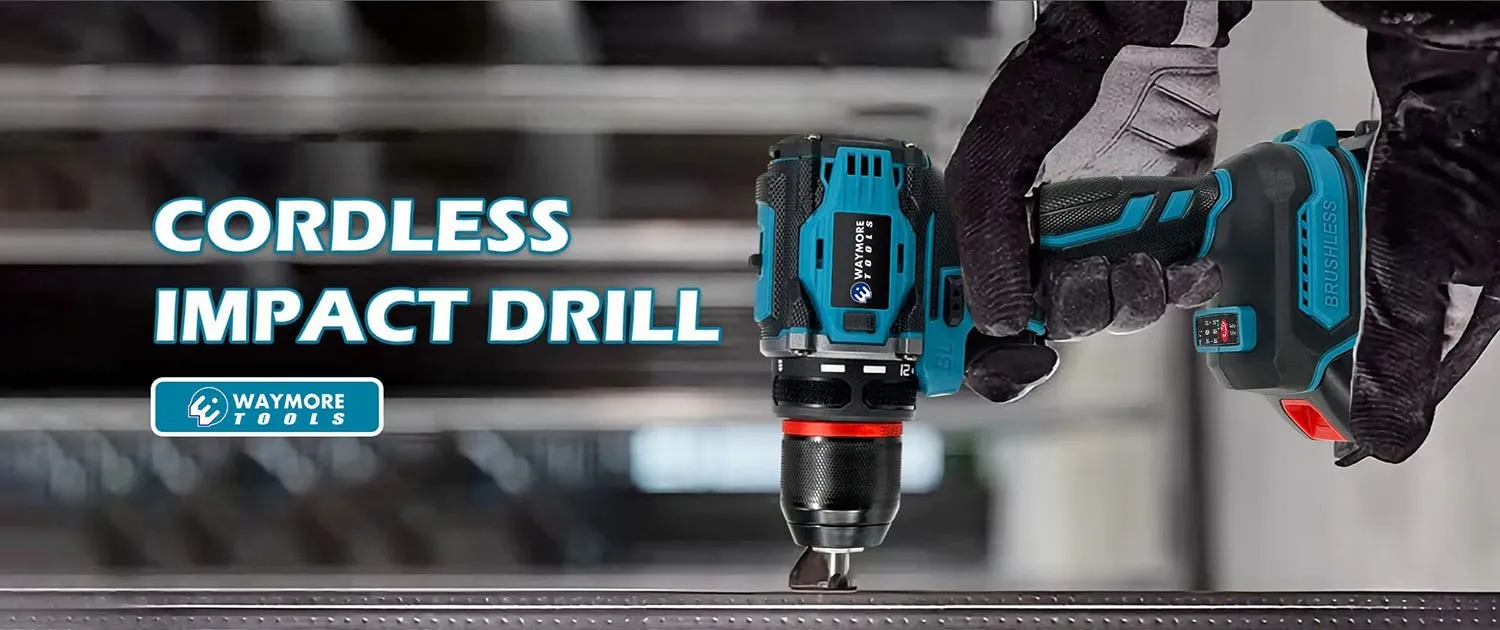
Drywall installation is one of the most repetitive and physically demanding jobs in construction. Every sheet of drywall requires dozens of screws driven to the perfect depth—not too shallow, not too deep. A power drill that isn't purpose-built for drywall slows down the crew, increases callbacks, and drives up labor costs.
For US contractors and wholesalers, choosing the right drywall drill—also called a screw gun or drywall screwdriver—means understanding clutch mechanisms, depth-sensing nosepieces, and the difference between a general-purpose drill and a tool built for board work.
Drywall Drills vs. General-Purpose Drills
A standard household drill or drill driver is not the right tool for drywall installation at scale. Here's why:
Clutch vs. Depth-Sensing Nosepiece
- General drills use a clutch that disengages the drive when torque reaches a set level. This stops the screw at inconsistent depths because wood density varies.
- Drywall screw guns use a depth-sensing nosepiece (often called a "bump nose" or "depth locator") that physically controls how deep the screw countersinks. The result is consistent screw depth across varying material densities.
Speed Control
Professional drywall drills operate at 4,000–5,000 RPM—significantly faster than standard drills. High speed allows for rapid screw driving without stalling. The best models offer adjustable speed ranges to match the operator's rhythm.
Magazine vs. Single Feed
- Collated drywall screw guns use strip-fed screws for production work—100+ screws per strip, no manual pickup required.
- Single-feed screw guns are lighter and more maneuverable for small patches, tight corners, and ceiling work.
Key Features for Drywall Drills
Depth Adjustment
Tool-free depth adjustment is essential for drywall. The nosepiece should allow quarter-turn adjustments so the operator can dial in the screw depth to match different board thicknesses (1/2" vs. 5/8") and framing materials.
Forward and Reverse Operation
A good drywall drill lets you pull screws out cleanly when you make a mistake. Reverse operation with a dual-action trigger or locking mechanism prevents accidental reversal during drive.
Dust Management
Drywall dust is the enemy of tool longevity. Look for:
- Sealed rotary switches that keep dust out of the electronics
- Dust-protected chuck or collet design
- Open-frame construction that lets dust pass through rather than accumulate
- Vacuum attachment ports for shop-vac connectivity
Ergonomics for Ceiling Work
Hanging drywall overhead is brutal on shoulders and arms. A well-designed drywall drill features:
- Lightweight construction (under 3.5 lbs for single-feed models)
- Comfortable side handle positioned for overhead work
- Cordless models that eliminate trailing cords that tangle on scaffolding
- Balance—the tool should sit neutral in the hand with no wobble
Top Drywall Drill Brands in the US Market
DeWalt
The DeWalt DCF620B 20V MAX drywall screw gun is the US market leader. It drives screws up to 6,000 RPM, has a patented depth-adjusting nosepiece, and uses DeWalt's FlexVolt battery platform. Available at every Home Depot and Lowe's.
Makita
Makita's XSF03M 18V LXT drywall screw gun is preferred by many pros for its lighter weight (3.5 lbs with battery) and smoother trigger. It features a depth adjustment that doesn't require tools and runs on Makita's well-known 18V LXT platform.
Milwaukee
The Milwaukee 2550-20 M12 FUEL drywall screw gun is a standout in the compact category. The M12 form factor is featherlight (2.5 lbs) while still delivering pro-grade performance. Ideal for finishing crews who already run Milwaukee M12 tools.
Senco
Senco's Duraspin D5P Duo-Fast series offers both single-feed and collated operation in one tool. A favorite among production drywall crews for its speed and reliability.
Hilti
Hilti's SBT 4-A22 drywall screw gun is the premium option. German engineering, sealed electronics, and the best dust protection in the class. Higher cost, but lower total cost of ownership for high-volume installers.
Drywall Application: Screw Spacing and Patterns
US building codes and industry standards dictate screw placement. A good drywall drill helps crews hit these patterns consistently.
Standard Screw Pattern (US)
- Perimeter: Screws every 6–8 inches along edges
- Field: Screws every 12 inches along framing members in the field
- Corners: Double screws on butt joints and corner conditions
- Depth: Slight paper dimple (1/32"–1/16" below surface)—no paper tear
Common Screw Types
| Screw Type | Gauge | Length | Application |
|---|---|---|---|
| Coarse thread drywall screw | #6 | 1-1/4" | Wood studs (softwood) |
| Fine thread drywall screw | #6 | 1"–1-1/4" | Metal studs |
| Self-piercing screw | #6 | 1"–1-5/8" | Metal studs (self-tapping) |
| Collated strip screws | #6 | 1"–1-5/8" | Production screw guns |
Wholesale Sourcing: What to Stock
For Residential Drywall Crews
Single-feed screw guns are the standard for most US drywall crews. They're affordable, reliable, and familiar to every operator. Stock configuration:
- 20V / 18V cordless drywall screw gun
- 2x batteries + charger (must be on the same battery platform as other crew tools)
- Depth-sensing nosepiece with spare depth locator fingers
- Magnetic bit holder for standard #2 Phillips bits
- Heavy-duty carrying case
For Commercial Production
Collated screw guns improve productivity by 30–50% for large commercial projects. Wholesale config:
- 4,000–5,000 RPM collated screw gun
- Strip-feed magazine for one-handed operation
- Adjustable depth stop for fine-tuning
- Vacuum attachment for low-dust environments (hospitals, schools)
- Extra magazine assembly (most common failure point)
Bidding and Pricing for Drywall Contractors
Understanding your customer's numbers helps you position the right product:
- Per-board cost: A drywall screw gun produces ~1,000+ screws per hour
- Waste reduction: 5–10% waste rate on materials—better tools reduce this
- Labor savings: Collated systems save 30–50% on screw-driving time vs. single-feed
- ROI: A $250 drywall screw gun pays for itself in 2–4 days on the job
Drywall Drill Maintenance
Daily
- Blow out dust from vents with compressed air
- Inspect depth nosepiece for wear or damage
- Check battery contacts and clean if necessary
- Test fire on a scrap board before starting the day
Weekly
- Lubricate gear case per manufacturer spec
- Inspect power cord (corded models) for cuts or wear
- Clean or replace drywall dust filter if equipped
- Check bit holder for wear—worn bits cause inconsistency
Monthly
- Full disassembly cleaning for heavy-use tools
- Replace depth locator fingers and springs
- Inspect clutch mechanism for slipping
- Update firmware on brushless models
US Regulatory and Safety Standards
OSHA Compliance
- 1926.300(b): Hand and power tool safety requirements
- 1926.302(e): Pneumatic power tools and fastening tools
- Personal protective equipment: Eye protection, dust mask, hearing protection required
Tool Certification
- UL listing required for retail sale in the US
- ETL certification is an acceptable alternative
- ANSI B7.1 for wheel/fastener safety where applicable
Choosing Between Corded and Cordless for Drywall
Cordless Advantages
- No trailing cords on scaffolding
- Faster setup and teardown
- Same battery platform as other job-site tools
- Sufficient runtime: 500–1,000 screws per battery
Corded Advantages
- Unlimited runtime for production work
- Lighter (no battery weight)
- Lower purchase cost
- No battery aging/replacement costs
Best advice for wholesalers: Stock both. Crews doing small-to-medium residential work overwhelmingly prefer cordless. High-volume commercial crews still favor corded collated screw guns for production speed.
Conclusion
The best power drill for drywall isn't a drill at all—it's a purpose-built drywall screw gun with depth-sensing nosepiece, high-speed drive, and ergonomics designed for ceiling work. For US contractors, the choice between DeWalt, Makita, Milwaukee, Senco, or Hilti comes down to battery platform loyalty and the specific mix of residential vs. commercial work.
Ready to stock the best drywall drills for your business? Contact Waymore Tools today for wholesale pricing, bulk orders, and expert guidance on the drywall fastening tools that keep US crews productive and profitable.
Get wholesale pricing on drywall drills →
💼 Stock the Best — At the Right Price
Whether you need one model or a full lineup, our factory can supply the exact specifications your customers demand. ISO 9001 certified, with 15+ years of OEM experience.
MOQ: 100 units per model · Custom branding available · Door-to-door shipping
Sourcing next step: compare the full power drill range, or review a specific model such as the 25V Brushless Drill and the 20V Cordless Drill with our export team — OEM/ODM branding, MOQ 100 units.