 WAYMORE TOOLS
Best Circular Saw for Deck Building in United States: Wholesale Sourcing Guide
For US contractors and wholesalers, selecting the right circular saw for deck building means understanding blade diameter, bevel capacity, dust management, and the unique demands of cutting both dimensional lumber and composite decking boards.
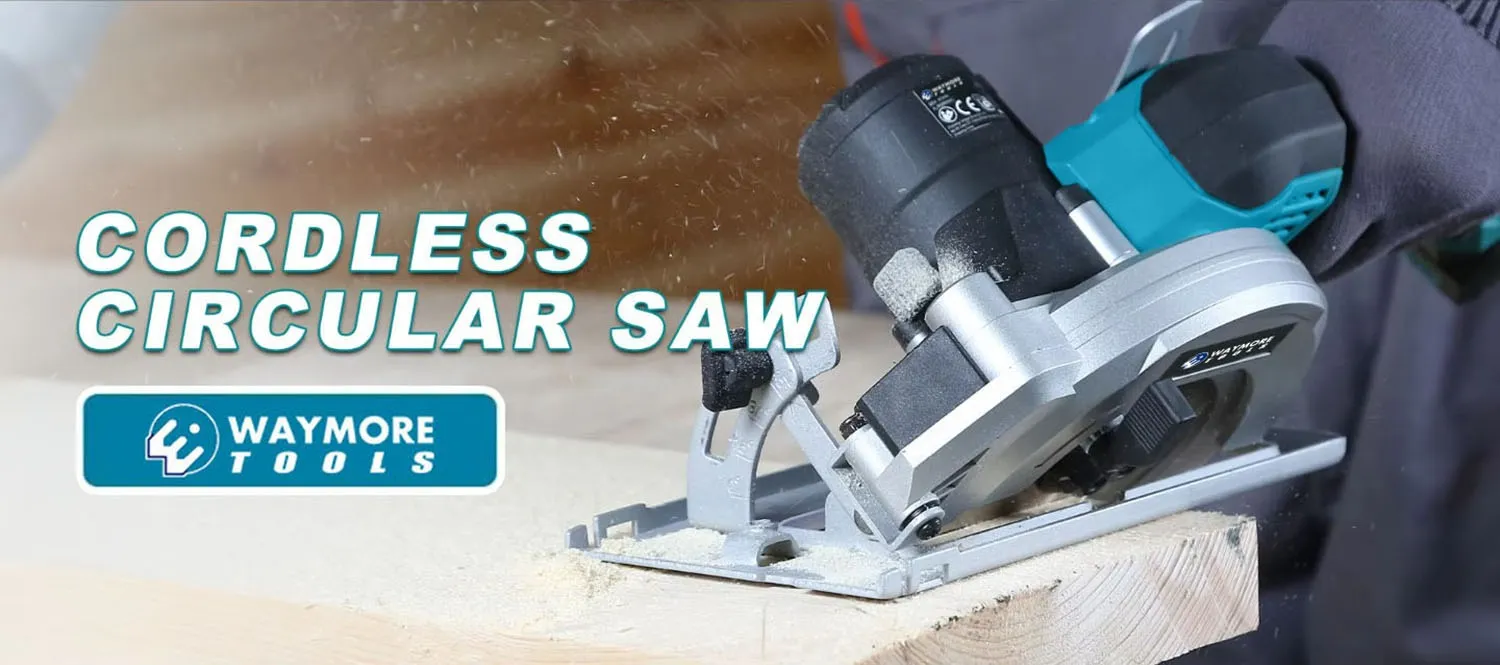
Deck building is one of the most popular DIY and professional construction projects in the United States. From composite decking installs in the Pacific Northwest to pressure-treated pine decks across the South, every deck starts with one essential tool: a reliable circular saw.
For US contractors and wholesalers, selecting the right circular saw for deck building means understanding blade diameter, bevel capacity, dust management, and the unique demands of cutting both dimensional lumber and composite decking boards.
The Role of a Circular Saw in Deck Building
A circular saw is the primary cutting tool on every deck project. While miter saws are used for trim and railings, the circular saw handles:
- Cutting joists and beams to length from 2x8, 2x10, and 2x12 lumber
- Ripping deck boards to width for pattern work and border boards
- Angle cuts for stairs, angled railings, and diagonal decking
- Notch cuts at ledger boards and post connections
- Bevel rip cuts where drainage or alignment requires an angled edge
Without a quality circular saw, a deck build slows to a crawl and accuracy suffers.
Key Specifications for Deck-Building Circular Saws
Blade Diameter
- 7-1/4" — The standard. Cuts through 2x lumber in a single pass. Available everywhere.
- 6-1/2" — Lighter and more compact. Good for composite decking and rip cuts. Lacks capacity for 45° bevel cuts through 2x12 lumber.
- 8-1/4" — Extra capacity for deep cuts. Heavier and less common. Overkill for most deck work.
For deck building, a 7-1/4" circular saw is the right choice for 95% of applications.
Motor Power
- 15 amp — The professional standard for corded models. Provides enough torque for ripping pressure-treated lumber and composite boards.
- 60V / 36V brushless — The best cordless option. DeWalt FlexVolt 60V and Makita 36V/XGT cordless saws can match corded power for most deck tasks.
- 18V–20V max — Suitable for light-duty deck work but will struggle with dense materials like ipe and thick composite boards.
Bevel Capacity
Deck building frequently requires bevel cuts for:
- Stair stringers — Typically cut at 45° or custom angles
- Fascia and trim — Miters at corners
- Drainage cuts — Angled rips for water runoff
Look for a saw with 0–56° bevel capacity at minimum. Models with the worm-drive-style left-blade design (like the Skilsaw Mag 77 or DeWalt DWE575) offer superior bevel visibility.
Cut Depth
- 2x lumber: Requires 1-1/2" to 5-1/2" cut depth depending on orientation
- Bevel cuts: A 7-1/4" blade at 45° cuts approximately 1-3/4" deep—adequate for 2x material
- Ripping full 2x12 wide: At 11-1/2" deep, this requires cutting from both sides or a full-depth pass
Blade Left vs. Blade Right
- Left-blade (worm-drive): Blade on the left side, motor on the right. Right-handed users can see the cut line clearly. The Skilsaw worm-drive is legendary in deck building.
- Right-blade (sidewinder): Blade on the right, motor on the left. More common and less expensive. Left-handed users appreciate the visibility.
For deck building, the left-blade design is preferred by most pros because you can see your cut line without leaning over the saw.
Top Circular Saws for Deck Building in the US
Skilsaw Mag 77 (Model SPT77WML-01)
The legendary worm-drive saw that built America's decks. 15 amp motor, magnesium construction (lightweight for a worm-drive), and the smooth power delivery that worm-drive gears are known for. The Mag 77 is heavy at 12 lbs but unmatched for all-day production cutting. Available at Home Depot and Lowe's.
DeWalt DWE575 / DCS578
DeWalt's 7-1/4" sidewinder (DWE575 corded) and FlexVolt (DCS578 cordless) are the most popular general-purpose saws for US deck builders. The DCS578 on a 60V FlexVolt battery rivals corded power and has been a game-changer for cordless deck work.
Makita 5007MG / XSH03Z
Makita's 5007MG is a pro-favorite magnesium sidewinder. At 10.6 lbs with the 15 amp motor, it's lighter than the worm-drive options. The XSH03Z 36V cordless version offers excellent runtime and power for deck building.
Milwaukee 2830-20 M18 FUEL
Milwaukee's rear-handle 7-1/4" saw (2830-20) is designed to mimic the worm-drive feel in a cordless package. 8-1/4" capacity, excellent power management, and a rafter hook for ladder work.
Skilsaw SPT67WM-22 (7-1/4" Sidewinder)
A lighter alternative to the Mag 77. All magnesium construction, 15 amp motor, and the same Skilsaw reliability at a lower price point. Good for deck builders who want Skilsaw quality without the worm-drive premium.
Deck Material-Specific Considerations
Pressure-Treated Lumber
PT lumber is wet, heavy, and abrasive. The chemicals used in the treatment process accelerate blade dulling. Best practices include:
- Carbide-tipped blades with 24 teeth for fast ripping
- Kerf-style blades to prevent binding in wet lumber
- Galvanized or coated screws to prevent chemical corrosion
- Blade cleaning after each deck project to remove pitch and chemical residue
Cedar and Redwood
These softwoods are a pleasure to cut but require sharp blades to prevent tear-out:
- 40–60 tooth blades produce a cleaner cut
- Zero-clearance or tape the cut line to prevent splintering
- Lower blade exposure for thin material
Composite Decking (Trex, TimberTech, Azek)
Composite materials are harder on tools than wood:
- Fine-tooth blades (60+ teeth with negative rake) prevent chipping
- Feather boards of composite produce more airborne dust—use dust collection
- No sacrificial coating: Blades wear faster—stock extra, especially for wholesale customers
- Warranty concerns: Many composite brands require ≥1/8" gap between boards and specific cutting techniques
Ipe and Hardwoods
Premium hardwood decking eats standard blades for breakfast:
- Specialty carbide blades with high alternate top bevel (ATB) geometry
- Slow feed rate to prevent burning
- Pre-drill fastener holes to avoid splitting
Wholesale Sourcing Recommendations
For General Deck Building
- 7-1/4" corded circular saw — 15 amp, left-blade preferred
- Spare 24-tooth carbide framing blade per saw
- Fine 40–60 tooth blade for trim and fascia
- Ergonomic case with blade storage
- Extra rafter hooks (these break)
For Composite Decking Specialists
- 7-1/4" cordless circular saw (60V or 36V for runtime)
- Negative-hook fine finish blades (62–80 tooth) — 3 per saw package
- Dust collection attachment — for health and clean job sites
- Zero-clearance shoe inserts to prevent chip-out
For Production Deck Crews
- Helical gear saws (worm-drive or hypoid) for smooth power delivery
- Twin-pack battery/charger kits to stay running all shift
- Blade case with labeled compartments
- Full-length 25' cord (corded models) or extra battery (cordless)
US Regulatory Landscape
Safety Standards
- ANSI/OPEI B175.1 — Safety specification for gas-powered and electric-powered chain saws and circular saws
- OSHA 1926.300 — General hand and power tool safety
- OSHA 1926.304 — Woodworking tools, including circular saws
Key Safety Features Required in US Market
- Lower blade guard — Must retract and close automatically
- Upper blade guard — Fixed, covers the blade above the shoe
- Retracting switch — Must release to "off" position
- Spindle lock — For safe blade changes
Retail Requirements
- UL listing or ETL certification required for big-box retailers
- California Proposition 65 warning labels for products with certain materials
- Energy Star for charging systems (cordless models)
Deck Building Workflow: How a Circular Saw Fits In
Stage 1: Foundation and Framing
The crew cuts ledger boards, beams, and joists to length. A worm-drive circular saw with a framing blade makes quick work of pressure-treated 2x10s and 2x12s. Speed matters here—this stage sets the pace for the entire project.
Stage 2: Deck Board Installation
Once the frame is down, deck boards are cut to length and laid. A lighter saw (sidewinder or compact cordless) is preferred for this continuous repetitive cutting. A fine-tooth blade reduces splintering on visible board ends.
Stage 3: Stairs and Railings
This is the precision phase. Bevels, angle cuts, and miters for stair stringers, railing posts, and balusters. A saw with good bevel visibility and angle markings is essential.
Stage 4: Trim and Fascia
Final trim work uses a circular saw with a finish blade for clean cuts on fascia boards, skirting, and decorative elements.
Conclusion
The best circular saw for deck building in the US combines the right blade orientation, adequate power, and durable construction for the punishing conditions of outdoor construction. Whether you prefer the legendary Skilsaw worm-drive for framing or the versatility of a cordless DeWalt or Milwaukee for finish work, the right saw makes the difference between a smooth build and a frustrating one.
Looking to stock the best deck-building circular saws for your customers? Contact Waymore Tools for wholesale pricing on Skilsaw, DeWalt, Makita, and Milwaukee circular saws. We offer bulk discounts, custom packaging, and fast fulfillment from US warehouses.
Get wholesale pricing on circular saws →
💼 Stock the Best — At the Right Price
Whether you need one model or a full lineup, our factory can supply the exact specifications your customers demand. ISO 9001 certified, with 15+ years of OEM experience.
MOQ: 100 units per model · Custom branding available · Door-to-door shipping
Sourcing next step: compare the full circular saw range, or review a specific model such as the Mini Circular Saw and the Waymore Tools 20V Circular Saw with our export team — OEM/ODM branding, MOQ 100 units.