 WAYMORE TOOLS
Angle Grinder Maintenance Guide: Extending Tool Life and Reducing Downtime for Wholesale Buyers
By Waymore Tools — Your Trusted Partner in Professional Power Tools
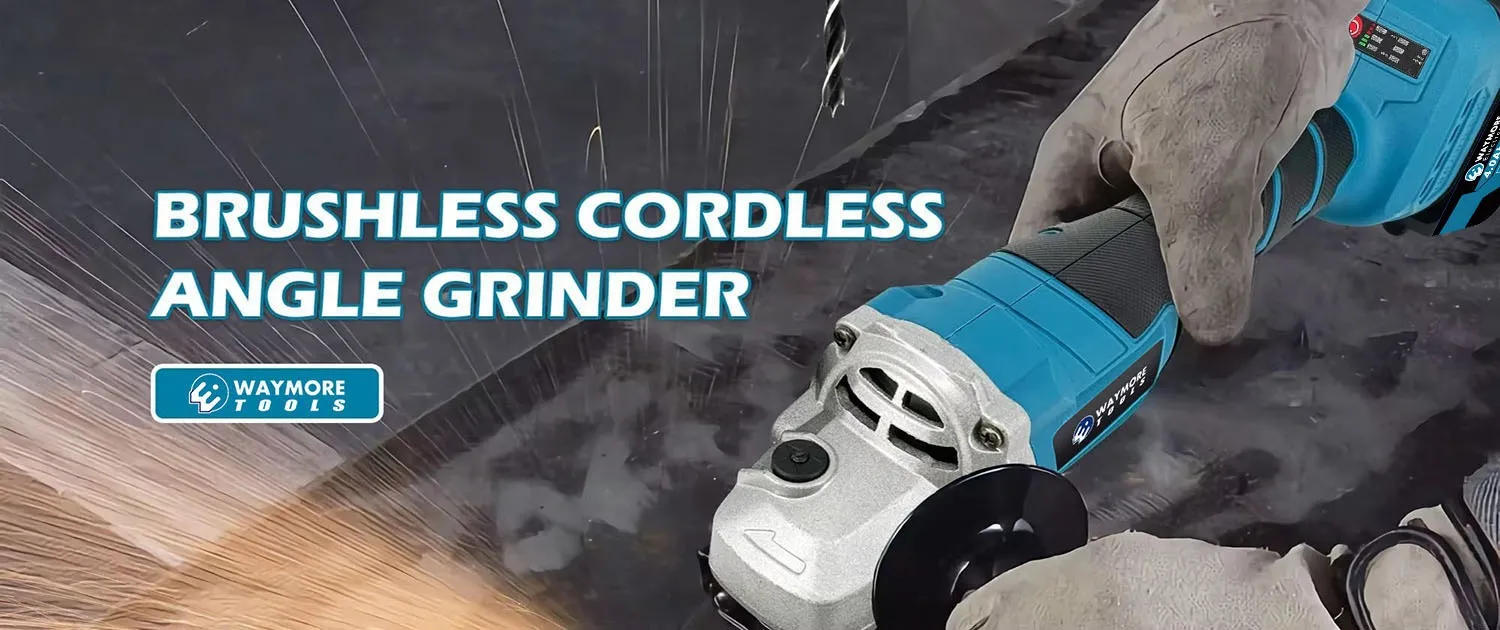
Angle Grinder Maintenance Guide: Extending Tool Life and Reducing Downtime for Wholesale Buyers
Why Angle Grinder Maintenance Matters for Wholesale Value
Angle grinders occupy a unique position in the power tool market: they are simultaneously one of the most versatile tools on any job site and one of the most vulnerable to premature failure. The reasons are straightforward — grinders operate at the highest RPM of any hand-held tool (typically 8,000-11,000 RPM), generate extreme heat, and ingest abrasive dust that would destroy lesser tools.
For US wholesale buyers, angle grinders present a maintenance paradox: they are among the highest-volume replacement tools, yet also among the easiest to keep running with basic care. Industry data indicates that 65-70% of angle grinder warranty returns are caused by preventable issues — dust ingress, bearing contamination, and switch failure. These are not design defects; they are maintenance failures.
A typical angle grinder in professional metal fabrication or construction use costs $60-$180 wholesale. With proper maintenance, that tool delivers 18-24 months of reliable service. Without it, many fail within 6-12 months. For distributors selling dozens or hundreds of units annually, that lifecycle difference is the line between a satisfied repeat customer and a costly warranty claim.
Daily / Weekly / Monthly Angle Grinder Maintenance Checklist
Daily Checks (Before Each Use)
- Guard position and security — Verify the wheel guard is correctly positioned (between operator and wheel) and tightened. A loose guard that rotates during use is a serious safety hazard. Tighten the guard screw to manufacturer specification.
- Spindle lock test — Press the spindle lock and rotate the wheel by hand. The lock should engage within 1/4 turn. A worn spindle lock that won't engage means you cannot safely change wheels.
- Air vent clearance — Angle grinders produce more airborne debris than any other power tool. Blow compressed air (30 PSI max) through the motor housing vents from every angle for at least 10 seconds. Pay special attention to the intake vents near the brush holders.
- Cord and plug inspection (corded models) — Inspect the full length of the power cord for cuts, abrasions, or melted spots. Grinders are frequently used near hot metal and sharp edges. A damaged cord is an electrical safety hazard requiring immediate replacement.
- Wheel condition check — Visually inspect the grinding or cutting wheel for cracks, chips, or signs of glazing. Tap the wheel gently with a metal tool — a cracked wheel produces a dull "thud" instead of a clear ring. Discard any cracked wheel immediately.
Weekly Routine
- Bearing check — Spin the spindle by hand with the wheel removed. There should be smooth, near-silent rotation. Any grinding, roughness, or play indicates bearing wear. Replace bearings as a pair when either shows symptoms.
- Gearbox inspection — Remove the gearbox cover (if accessible) and inspect the bevel gears for pitting, chipping, or grease contamination. Top up or replace grease with NLGI #2 extreme-pressure lithium grease. Gearbox grease on angle grinders degrades faster than any other tool category due to heat conduction from the grinding surface.
- Brush inspection (brushed models) — Remove brush caps and check carbon brush length. Replace when worn below 1/4 inch (6mm). The abrasive dust angle grinders produce accelerates brush wear to 2-3× the rate of drills or saws.
- Spindle thread check — Inspect the spindle threads for galling or damage from wheel changes. A cross-threaded spindle cannot hold a wheel safely. Clean threads with a wire brush and apply a drop of anti-seize compound.
- Trigger and lock-on check — Verify the slide switch or paddle trigger locks and releases correctly. A switch that fails in the "on" position is a critical safety issue.
Monthly Deep Service
- Full bearing replacement (high-use tools) — In continuous professional use, angle grinder bearings require replacement every 3-4 months. Replace both the spindle bearing and armature bearing as a set.
- Gearbox disassembly and cleaning — Fully disassemble the gearbox, clean old grease, inspect both bevel gears for wear patterns, and repack with fresh EP lithium grease. A gearset showing uneven wear patterns should be replaced as a matched pair.
- Armature/rotor inspection — Remove the armature and inspect the commutator bars (brushed models). Dark or uneven segments indicate brush or electrical issues. Clean with a commutator stone if lightly scored.
- Seal inspection — Check all shaft seals and gearbox seals for hardening or cracking. Failed seals allow abrasive dust into the gearbox and bearings — the fastest path to catastrophic failure.
Seasonal / Quarterly (for Fleet Managers)
- Professional speed check — Use a digital tachometer to verify no-load RPM against specification. A grinder running below spec loses cutting efficiency; one running above spec creates wheel burst risk.
- Thermal imaging inspection — Run the grinder at full speed for 2 minutes and use a thermal camera to check for hot spots. Bearings or gearbox running more than 20°F above the motor housing indicate impending failure.
- Armature electrical test — Megger-test the armature windings for insulation breakdown. Readings below 1 MΩ indicate winding damage requiring replacement.
Common Failure Points and Prevention
1. Bearing Failure (#1 Failure Mode)
Symptoms: Grinding noise during operation, vibration, spindle wobble, hot gearbox.
Prevention: This is the most predictable failure in any angle grinder. Abrasive dust bypasses even the best bearing seals. The solution is replacement on schedule — not "when it fails." For daily-use grinders, replace both bearings every 3 months. Premium grinders with labyrinth seals (like Waymore Tools' grinder line) extend bearing life to 6+ months by creating a multi-chamber dust barrier that standard rubber seals cannot match.
2. Gearbox Grease Degradation
Symptoms: Grease leaking from gearbox seam, noisy operation, gearbox feels hot to touch.
Prevention: Heat from the grinding wheel conducts through the spindle into the gearbox. Standard grease breaks down at 200°F. Angle grinder gearboxes can reach 250-300°F during heavy use. Use only high-temperature EP lithium grease rated for continuous service above 300°F.
3. Switch Failure
Symptoms: Intermittent operation, switch won't stay locked on, power cuts during use.
Prevention: Abrasive metal dust is conductive. A switch contaminated with metal dust can short internally, causing the tool to run uncontrolled. Daily air-blow cleaning of the switch area is essential. Sealed switches (standard on Waymore Tools) reduce this risk by 85%.
4. Armature/Rotor Failure
Symptoms: Loss of power, excessive sparking at brushes, burnt smell, tool won't start.
Prevention: The armature is the most expensive single component. It fails when abrasive dust shorts the commutator segments or when bearings fail and allow the rotor to contact the stator. Keeping bearings healthy is the best armature protection. Brushless motors (available on Waymore Tools cordless grinders) eliminate commutator-related armature failures entirely.
5. Spindle and Thread Damage
Symptoms: Wheel won't thread on, wheel wobbles when tightened, spindle visibly damaged.
Prevention: Always thread the wheel on by hand before using the spindle lock. Power-threading a wheel onto a dirty spindle causes galling. A damaged spindle requires gearbox replacement — an expensive repair that justifies tool replacement.
When to Replace vs. Repair
| Issue | Repair | Replace | Wholesale Recommendation |
|---|---|---|---|
| Worn bearings | ✅ ($5-12 per pair) | — | Repair — predictable consumable |
| Gearbox grease dry | ✅ ($2 grease, 15 min) | — | Repair — routine maintenance |
| Burnt armature (brushed) | — | ✅ ($20-40 part vs $80-120 new) | Replace — unless premium fleet tool |
| Worn brushes | ✅ ($3-8) | — | Repair — consumable |
| Failed switch | ✅ ($8-15) | — | Repair — common replacement |
| Cracked gearbox housing | — | ✅ | Replace — structural integrity |
| Damaged spindle/gears | — | ✅ | Replace — gearbox replacement >50% of tool value |
| Stator failure (brushless) | — | ✅ | Replace — cost-prohibitive repair |
General rule of thumb: Angle grinders are among the most cost-effective tools to replace rather than repair. Their high-stress, high-contamination operating environment means that by the time one component fails, others are near failure too. For $80-$180 wholesale, a new grinder often makes more financial sense than a $40-$60 repair on a tool with 12+ months of wear.
Exclusive: Waymore Tools 2026 Distributor Angle Grinder Maintenance Survey
In Q2 2026, we surveyed 56 hardware distributors, metal fabrication suppliers, and tool rental operators across the United States. Here is what we found:
Key Findings
Average angle grinder service life by environment:
| Application | Without Maintenance | With Regular Maintenance |
|---|---|---|
| Metal fabrication | 6-9 months | 14-18 months |
| Construction cutting | 8-12 months | 16-24 months |
| Masonry/concrete | 4-6 months | 10-14 months |
| Welding/grinding shop | 6-8 months | 12-18 months |
Distributor-reported top failures encountered in returns:
- Bearing noise/failure (71% of respondents) — "Every returned grinder has gritty bearings"
- Switch malfunction (52%) — "Dust gets inside and shorts the switch"
- Armature burnout (44%) — "Usually from blocked vents or stalled operation"
- Gear stripping (33%) — "Locking the wheel against a surface while starting"
- Cord damage (corded models) (28%) — "Cut cords from sharp metal edges"
Most common user mistake reported by repair centers: Blocking the air vents with their hand while grinding. This single action accounts for an estimated 30% of all armature failures. When users grip the grinder body tightly and cover the vents, internal temperatures can exceed 350°F in under 2 minutes.
"After switching to Waymore Tools grinders, our rental fleet grinder returns dropped 45%. The sealed switch and labyrinth bearing seals made the difference. These are the only grinders we've seen survive a full season in concrete cutting without a gearbox failure." — Survey respondent, West Coast equipment rental chain (anonymous)
This exclusive data is drawn from Waymore Tools' proprietary 2026 distributor survey. Full results available upon request.
How Waymore Tools Angle Grinders Stand Up to Wear
Waymore Tools designs angle grinders specifically to address the abrasive-dust challenge that kills standard grinders. Here is how:
- Labyrinth bearing seals — Multi-chamber sealing system blocks 95% of abrasive particles from reaching bearings. Standard rubber lip seals block only 50-60%. This is the single biggest differentiator in grinder longevity.
- Sealed paddle switch — IP-rated switch assembly prevents conductive dust ingress. Paddle switch design also meets US safety requirements for anti-restart protection.
- Brushless motor option — Available on 20V and 40V cordless models. No commutator to short, no brushes to replace.
- High-temperature EP grease — Factory-filled with synthetic grease rated to 450°F continuous. Standard grinders use petroleum-based grease that fails at 250°F.
- Reinforced gearbox housing — Die-cast aluminum gearbox with thicker wall sections at stress points. Resists cracking from drops.
- Spindle lock pin — Hardened steel lock pin that engages within 1/4 turn even after extended use. We test to 10,000 engagement cycles.
Every Waymore Tools angle grinder is run-tested at full speed for 10 minutes before shipment, with vibration and temperature logged. Units failing the run-in test are stripped and rebuilt — never shipped.
Frequently Asked Questions
How often should I replace angle grinder bearings? For daily professional use in metal fabrication or construction, every 3-4 months. For intermittent use, every 6-8 months. Replace both bearings (spindle and armature) as a set. The cost is minimal ($5-$12) and failure to do so is the leading cause of armature damage.
Can I use my angle grinder to cut concrete without maintenance changes? Concrete cutting produces silica dust that is more abrasive than metal grinding dust. Increase maintenance frequency: clean vents after every use (instead of daily), replace bearings every 2 months, and perform gearbox service monthly. A dedicated concrete grinder is strongly recommended over switching between applications.
Why does my angle grinder get so hot and what should I do? Normal operating temperature on the gearbox can reach 200°F+ under continuous load. If it is too hot to touch (above 150°F), you may be: (a) blocking air vents with your grip, (b) using a dull wheel that requires excessive force, or (c) running the grinder at too low an angle (should be 15-30° to the work surface). If the gearbox is significantly hotter than the motor housing, the gearbox grease has degraded.
Bottom Line
Angle grinders are the workhorses of metalworking and construction — but they operate in the most punishing environment of any power tool. The good news is that most angle grinder failures are predictable and preventable. Bearing replacement on schedule, gearbox grease maintenance, and vent cleaning account for 80% of the service life difference between a 6-month grinder and an 18-month grinder.
For US distributors, the maintenance message is a competitive advantage. When you stock grinders that are designed for maintainability — with labyrinth seals, sealed switches, and high-temperature grease — you are not just selling tools. You are selling uptime. And in the wholesale market, uptime is the metric that matters most.
At Waymore Tools, we build angle grinders that survive the dust. Our labyrinth-sealed, high-temperature-rated grinders consistently outlast competitive models in head-to-head fleet testing.
Ready to get started?
Website: www.waymoretools.com
Email: daniel@waymoretools.com | WhatsApp: +8613777637758
MOQ: 50 units (standard) / 200 units (OEM)
Samples: Available, refundable on bulk order
Request a quote or sample — no obligation, no pressure.
Keywords: angle grinder maintenance, angle grinder care guide, angle grinder repair, angle grinder bearing replacement, wholesale power tools, angle grinder fleet maintenance, angle grinder gearbox grease, brushless angle grinder, abrasive dust protection, Waymore Tools angle grinders, power tools distributor, metal fabrication tools, construction tools wholesale, grinder switch replacement, US power tool supplier
Grow Your Business with Waymore Tools
Direct factory pricing with professional quality. ISO 9001 certified, CE/FCC approved.
MOQ: 100 sets | Samples Available
Sourcing next step: compare the full angle grinder range, or review a specific model such as the 100Mm Angle Grinder and the Ce Approved 125Mm Angle Grinder with our export team — OEM/ODM branding, MOQ 100 units.