 WAYMORE TOOLS
Angle Grinder Application Guide: Cutting, Grinding, Polishing, and Wholesale Inventory Planning
The angle grinder is one of the most aggressive and versatile power tools in metalworking and construction. With the right disc, it can cut through reba...
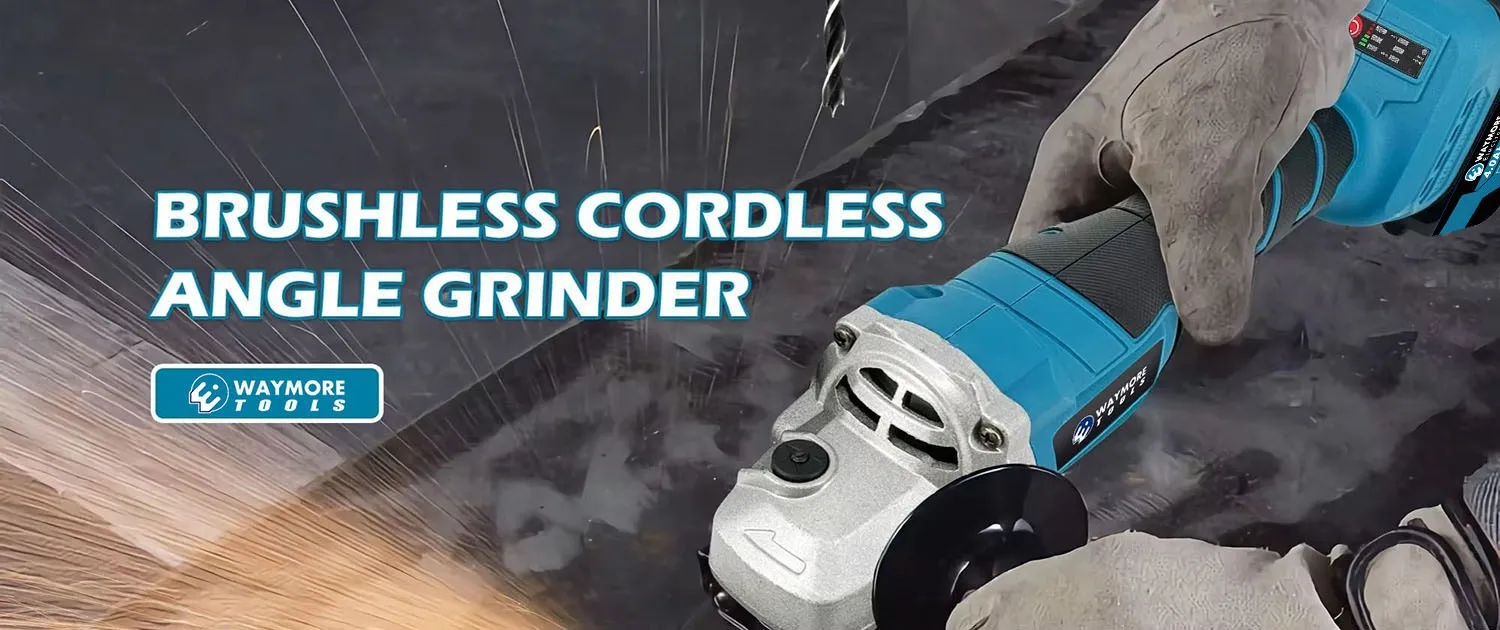
Angle Grinder Application Guide: Cutting, Grinding, Polishing, and Wholesale Inventory Planning
Introduction
The angle grinder is one of the most aggressive and versatile power tools in metalworking and construction. With the right disc, it can cut through rebar, grind welds smooth, polish stainless steel to a mirror finish, or strip paint off concrete. For wholesalers and distributors, the angle grinder category offers strong volume, high consumable repeat rates, and a wide range of price points from budget to professional.
This guide covers all major angle grinder applications, disc selection, safety essentials, and strategic wholesale inventory planning.
Part 1: Angle Grinder Types and Sizes
Disc Diameter Classes
| Size | Power Range | Typical Use |
|---|---|---|
| 4" / 4-1/2" (100-115mm) | 500-1,000W | Light cutting, grinding, polishing — most common size |
| 5" (125mm) | 800-1,200W | General purpose, popular in Europe and Asia |
| 7" / 9" (180-230mm) | 1,500-2,600W | Heavy cutting, large pipe, structural steel |
Wholesale Insight: The 4-1/2" angle grinder accounts for ~60% of global sales. It's the entry point for DIY users and the daily driver for pros. Stock this size most heavily.
Power Source
- Corded electric: Unlimited runtime, consistent power. Best for workshops and job sites with power access. 90% of pro users prefer corded for cutting and grinding.
- Cordless (battery): Growing fast. Brushless 18V/20V models now rival corded performance. Preferred for quick cuts, maintenance work, and remote jobs.
- Pneumatic (air): Used in industrial fabrication and automotive body shops. Lightweight, high RPM, but requires an air compressor.
Key Features by Application
| Feature | Benefit |
|---|---|
| Variable speed (2,800-11,000 RPM) | Enables polishing and surface prep (not just cutting/grinding) |
| Anti-restart protection | Safety after power interruption — critical for construction |
| Soft-start | Reduces torque jerk at startup — better control and disc life |
| Paddle switch vs slide switch | Paddle = safer (requires grip); slide = easier for extended use |
| Tool-less guard adjustment | Faster job-site transitions (cut → grind → cut) |
Part 2: Application-by-Application Guide
1. Cutting
The most common angle grinder application.
Disc Types:
- Cut-off wheels (thin, 1/16" to 1/8"): For clean, fast cuts in metal, rebar, pipe, sheet metal
- Diamond blades: For masonry, concrete, tile, brick — wet or dry
- Abrasive cut-off discs: General purpose metal cutting — inexpensive but wear faster
Best Practices:
- Use a cutting guide or clamp the work piece — never cut freehand for critical dimensions
- Let the tool do the work; forcing increases disc wear and kickback risk
- Cut in a straight line; twisting the disc causes binding and breakage
- For deep cuts: do multiple passes rather than one deep plunge
Material-Specific Cutting:
| Material | Recommended Disc | RPM | Technique |
|---|---|---|---|
| Mild steel | Aluminum oxide cut-off wheel | Max speed | Straight through |
| Stainless steel | Zirconia or ceramic cut-off wheel | Max speed | Steady feed, don't overheat |
| Concrete | Diamond segmented blade | Max speed | Wet cutting preferred |
| Tile | Diamond continuous rim blade | Medium speed | Score first, then cut through |
| PVC/plastic | Abrasive or carbide blade | Low speed | Slow feed to avoid melting |
2. Grinding
Removing material, smoothing welds, or shaping metal.
Disc Types:
- Grinding wheels (Type 27 depressed center): General purpose — weld removal, edge beveling
- Flap discs: Blended grinding and finishing — longer life, cooler cutting
- Cup wheels (steel or diamond): Heavy surface grinding on concrete or stone
Grit Selection Guide:
| Grit | Application |
|---|---|
| 24-36 | Heavy stock removal, rough welds |
| 40-60 | General grinding, shaping |
| 60-80 | Smoothing, blending |
| 80-120 | Fine surface prep before finishing |
Best Practices:
- Use the grinding disc at a 15-30° angle
- Move the grinder in a consistent pattern — don't linger in one spot (creates gouges)
- For weld grinding: grind along the weld line, not across it
- Flap discs last 3-5x longer than grinding wheels and produce a better finish — upsell pros to flap discs
3. Polishing and Finishing
Turning rough metal into a smooth, reflective surface.
Disc/Pad Types:
- Surface conditioning discs (Scotch-Brite type): Cleaning, deburring, blending
- Non-woven pads: Light surface prep, paint removal, corrosion cleaning
- Wool polishing bonnets: Stainless steel and aluminum finishing
- Sanding discs (hook-and-loop): Wood and auto body prep
Process Sequence (Metal Polishing):
- Grind with 36-60 grit (remove heavy defects)
- Blend with 80-120 grit flap disc
- Surface condition with 180-240 grit
- Polish with compound and wool bonnet
- Final buff with clean bonnet
Wholesale Opportunity: Polishing accessories (bonnets, compounds, conditioning discs) are high-margin consumables with strong repeat purchase patterns from auto body shops and metal fabricators.
4. Surface Preparation (Stripping and Cleaning)
- Wire cup brushes: Rust removal, paint stripping, concrete cleaning — carbon steel (ferrous) or stainless (non-ferrous)
- Strip discs: Fast paint and coating removal without loading up
- Diamond grinding wheels: Concrete surface leveling, coating removal, floor prep
Part 3: Safety — The Non-Negotiable Section
Angle grinders are statistically the most dangerous power tool in construction. When operating above 10,000 RPM with a disc that can shatter, safety is paramount.
Critical Safety Rules
- Always use the guard — never remove it for convenience. A shattered disc at 10,000 RPM is a fragmentation grenade.
- Use the correct disc for the RPM — discs have maximum RPM ratings printed on them. Exceeding them causes disc failure.
- Two-handed operation — use the side handle. Angle grinders generate substantial torque.
- Eye and face protection — safety glasses + face shield. Disc fragments hit hard.
- Inspect discs before use — check for cracks, chips, or wetness (wet discs fail at speed).
- Disconnect power when changing discs — prevents accidental startup.
- Never use a cutting disc for grinding — cutting discs are thinner and will shatter under side load.
- Avoid the "kickback zone" — the 90° quadrant where the disc exits the cut is the most dangerous. Keep it away from your body.
Wholesale Tip: Bundle angle grinders with a starter safety kit — guards, extra handles, safety glasses, and a pack of quality discs. It increases perceived value and encourages safe operation.
Part 4: Wholesale Inventory Planning
Demand by Customer Segment
| Segment | Grinder Preference | Accessory Needs | Purchase Frequency |
|---|---|---|---|
| DIY homeowner | 4-1/2" corded or basic cordless | Multi-pack cutting discs | 1 grinder every 3-5 years |
| Contractor/metalworker | 4-1/2" + 7" corded (pro models) | Flap discs, grinding wheels, wire brushes | 2-3 grinders annually, discs monthly |
| Fabrication shop | 7"/9" corded + pneumatic | Cup wheels, diamond blades, strip discs | Bulk grinder replacements, weekly disc orders |
| Auto body | 4-1/2" variable-speed | Polishing pads, compounds, conditioning discs | Specialized consumables quarterly |
| Construction | 4-1/2" + 7" cordless (brushless) | Diamond blades, cutting discs | Seasonal (project-driven) |
SKU Strategy
Build your angle grinder inventory across three tiers:
Entry Tier ($20-50 wholesale):
- 4-1/2" corded, fixed speed, slide switch
- Basic accessory kit (2 discs, wrench, side handle)
- Target: DIY, light commercial
Mid Tier ($50-100 wholesale):
- 4-1/2" or 5" corded, variable speed, paddle switch
- Brushless motor option
- Soft-start, anti-restart
- Target: Serious DIY, tradespeople
Pro Tier ($100-250 wholesale):
- Multiple sizes (4-1/2", 7", 9")
- Brushless motor, electronic clutch, vibration control
- Dust extraction capable
- Target: Professional contractors, industrial
Consumable Strategy (High Margin)
Angle grinder consumables generate 40-60% margin and repeat purchases every 1-4 weeks for active users.
- Cut-off discs: Offer in 10-packs and 50-packs. Stock aluminum oxide (general), zirconia (stainless), and diamond (masonry).
- Flap discs: Stock 40, 60, 80, and 120 grit in bulk. Flap discs are the #1 upsell from basic grinding wheels.
- Grinding wheels: Type 27 (depressed center) in 4-1/2" and 7". Stock 1/4" for general and 1/8" for precision.
- Wire brushes: Cup and wheel styles. Carbon steel (general) and stainless (non-ferrous).
Conclusion
The angle grinder is a cornerstone product for any power tool wholesaler. Its versatility — cutting, grinding, polishing, stripping — and the high margin of its consumable ecosystem make it a category that drives both initial sale and ongoing revenue.
By stocking the right sizes for your market (lead with 4-1/2"), offering corded and cordless options, and building a strong accessories and consumables program, you can capture customers at every level from weekend warriors to industrial metal fabricators.
Ready to Stock Quality Angle Grinders?
Waymore Tools offers a full range of angle grinders, from 4-1/2" compact models to 9" industrial cut-off machines, plus a complete line of cutting discs, grinding wheels, flap discs, and polishing accessories. All products meet CE, ETL, and RoHS standards.
We specialize in wholesale partnerships with:
- Competitive factory pricing on volume orders
- Custom branding and packaging options
- Bulk consumable packs for higher margins
- Reliable supply chain with on-time delivery
[Contact Waymore Tools] for a wholesale price list and catalog. Power your customers' toughest jobs.
This guide is part of the Waymore Tools Product Application Guide series. For more application-specific guides, visit our resources page.
Grow Your Business with Waymore Tools
Direct factory pricing with professional quality. ISO 9001 certified, CE/FCC approved.
MOQ: 100 sets | Samples Available
Sourcing next step: compare the full angle grinder range, or review a specific model such as the Cordless Battery Angle Grinder and the 125Mm Angle Grinder with our export team — OEM/ODM branding, MOQ 100 units.