 WAYMORE TOOLS
Air Blower Manufacturing in China: OEM/ODM Options and Quality Standards
By Waymore Tools — Your Trusted Partner in Professional Air Blower Solutions
Air Blower Manufacturing in China: OEM/ODM Options and Quality Standards
If you are an importer, distributor, or wholesaler considering air blower for your catalog, this guide is your complete playbook — the same briefing we give new distribution partners, in writing. It covers the product landscape, specifications, pricing tiers, quality control, logistics, and supplier selection, so you can source air blower profitably from day one.
Executive Summary
The air blower wholesale market in China/Global is at a pivotal moment. Market value sits at approximately $38+ billion with projected growth of 4.5% CAGR through 2030, and the dynamics of supply, demand, and channel structure are shifting faster than at any point in the past decade. For B2B buyers — distributors, importers, and procurement managers — the decisions made in the next 12 months will set the competitive position for years to come.
Three forces define this moment. First, cordless and brushless technology has crossed the quality threshold — professional buyers now accept battery tools for work that was once corded-only, and this is reshaping both product mix and margin structure. Second, e-commerce now carries more than 30% of power tools volume in most developed markets, which changes how wholesale pricing, fulfillment, and inventory planning work. Third, global supply chains remain in flux — tariff changes, shipping volatility, and regional production shifts mean the reliable factory partner you choose today matters more than the price you negotiate today.
This guide distills the complete sourcing playbook for air blower: what to buy, what to pay, how to verify quality, how to ship, and how to build a supplier relationship that lasts.
Key takeaways for China/Global buyers:
- Demand is structural, not cyclical — air blower are a year-round category driven by construction, maintenance, and DIY spending
- Margin is in the supply chain — factory-direct and private label sourcing delivers 400–800% wholesale-to-retail spreads versus 30–50% on branded distribution
- Compliance is a competitive moat — CE, FCC, RoHS; market-specific certification required documentation is a barrier that separates professional suppliers from the rest
- Platform matters — shared battery platforms across a tool range drive repeat purchases and customer lock-in
Key Specifications Every Wholesaler Should Know
Before you can evaluate suppliers, compare quotes, or advise customers, you need working knowledge of the specifications that actually matter. The table below summarises the core specification ranges for air blower.
| Specification | Typical Range | Why It Matters |
|---|---|---|
| Air speed | 180–250 km/h (consumer); 250–320 km/h (professional) | Determines suitability for the target application and price tier |
| Air volume | 400–800 m³/h (handheld); 800–1,200 m³/h (backpack) | Determines suitability for the target application and price tier |
| Power source | Corded electric (600–1,200W), cordless 18V–40V, gas (26–80cc), backpack battery | Determines suitability for the target application and price tier |
| Voltage / battery | 18V/20V (handheld), 36V/40V/80V (heavy-duty) | Determines suitability for the target application and price tier |
| Noise level | 65–75 dB(A) (battery); 90–105 dB(A) (gas) | Determines suitability for the target application and price tier |
| Weight | 1.5–2.5 kg (handheld); 4–7 kg (backpack) | Determines suitability for the target application and price tier |
Reading specifications like a professional means looking past the headline numbers. Two drills with the same voltage can differ dramatically in torque curve, chuck quality, and sustained performance under load. When evaluating factory quotes, ask for test data, not just spec sheets: no-load speed, torque under load, runtime at continuous duty, and charging times. A factory that can produce real test data is a factory that tests — and that is the factory you want.
Specification choices also drive your margin structure. Brushless motors add 15–40% to wholesale cost but justify premium retail pricing and deliver the runtime that professional buyers demand. Metal chucks, quality gears, and branded battery cells (Samsung, LG, EVE, Lishen) add durability that reduces warranty returns — which protects both your margin and your reputation with downstream customers.
Wholesale Pricing and Margin Structure
Pricing in the air blower category operates on a clear ladder. Understanding each rung — and where you sit on it — is the difference between a commodity reseller and a profitable wholesale business. The table below shows realistic wholesale and retail price bands for the USD market.
| Model Tier | Wholesale (USD) | Typical Retail (USD) | Spread |
|---|---|---|---|
| Corded 600W handheld blower | $8–14 | $29–49 | 2.5–4x |
| Cordless 18V handheld blower (bare) | $18–30 | $59–99 | 2.5–4x |
| Cordless 20V brushless blower kit | $35–55 | $119–179 | 2.5–4x |
| Backpack battery blower (40V) | $80–130 | $279–399 | 2.5–4x |
| Gas 52cc backpack blower | $60–95 | $199–299 | 2.5–4x |
Three sourcing models determine where you land on this ladder. Branded distribution (authorized dealer) yields 30–50% gross margins, but brings demand, marketing support, and warranty service from the brand. Parallel import / gray market improves margins to 60–100% but carries compliance, warranty, and supply risk. Factory-direct import — buying directly from a Chinese manufacturer — delivers the full 400–800% wholesale-to-retail spread, and adds OEM/private label options that build a brand asset of your own.
The math on factory-direct is compelling. A brushless air blower kit at $28–45 wholesale retails at $99–149 — a spread of roughly $70–100 per unit. At container volumes (500–2,000 units), that spread compounds into a substantial gross profit pool, before accessories and consumables are added. Even accounting for freight, duties, and inspection, the landed-cost advantage over branded distribution typically exceeds 40%.
Quality Control: The Checklist That Protects Your Business
Quality failures in the air blower category are expensive in three ways: direct replacement cost, freight cost for returns, and — worst of all — reputation damage with your downstream customers. A systematic QC process prevents all three. The checklist below is the standard we recommend every importer apply, regardless of which factory they choose.
| Checkpoint | What to Verify | Red Flags |
|---|---|---|
| Motor and internals | Brushless or quality brushed motors; branded components | Unbranded motors, no test data, inconsistent batches |
| Materials and finish | Metal chucks/gears at expected tiers; quality plastic housing | Thin plastic, zinc castings, poor molding seams |
| Battery cells | Branded cells with spec sheets (capacity, discharge rate) | Unknown cells, inflated capacity claims |
| Certification | CE, FCC, RoHS; market-specific certification required documentation provided and verifiable | No certs, or certificates that fail verification |
| Packaging | Retail-ready packaging, correct language, barcodes | Damaged packaging, wrong language, no barcodes |
| QC process | Inline testing, AQL sampling, pre-shipment inspection reports | No documentation, inspection refused |
| After-sales | Spare parts stock, warranty terms in writing | Vague warranty, no parts commitment |
Three practical rules make QC work. First, inspect every batch — third-party inspection (SGS, TÜV, Intertek, or a trusted local agent) at 1–3% of order value is cheap insurance. Second, keep benchmark samples from every production batch, sealed and dated, so disputes have an objective reference. Third, negotiate a defect-rate SLA (typically 1–3% AQL) into your contract, with clear remedies — credit, replacement, or rework — before you sign.
Logistics and Import Process
For importers buying from China, logistics is where margins are won or lost. Freight typically adds 5–15% to landed cost depending on route, volume, and mode — and poor logistics planning quietly erodes the factory-direct advantage. The fundamentals are simple, but execution discipline matters.
| Factor | Standard Practice | Notes |
|---|---|---|
| Sea freight (LCL) | 15–35 days transit | Best per-unit cost; consolidate multiple categories in one container |
| Sea freight (FCL) | 20ft / 40ft containers | Cost-effective from ~8m³ / ~16m³ volume |
| Air freight | 5–7 days | For urgent restocks, samples, and high-value small orders |
| Incoterms | FOB (most common), EXW, CIF, DDP | FOB gives you control over the forwarder and freight cost |
| Documentation | Commercial invoice, packing list, bill of lading; destination-specific certification | Prepare before shipment; errors cause customs delays and fees |
| Customs clearance | Licensed broker in destination | Broker fees are modest; errors are expensive |
Route planning for China/Global: shipments to China/Global typically land at the nearest major port, with Commercial invoice, packing list, bill of lading; destination-specific certification as the core documentation set. Lead time planning should account for production (15–25 days), sea transit, customs clearance (3–7 days), and last-mile delivery. Buffer 3–5 days in every schedule — the cost of a buffer is far lower than the cost of a stockout.
Duties for the China/Global market: Varies by destination market (2.7% EU, 3.9% US base, 5% GCC). Duty rates directly affect your landed cost and therefore your pricing — verify the correct HS code classification for air blower with your broker before quoting, and revisit it when product mix changes.
How to Choose the Right Factory Partner
The factory you choose determines your product quality, your margins, your lead times, and your ability to respond when the market shifts. The selection criteria below are the ones that separate professional suppliers from the rest — use them as a scorecard when evaluating candidates for air blower.
- Air speed and volume spec for the application (km/h + m³/h)
- Battery platform and runtime for commercial use
- Noise compliance for residential and EU restrictions
- Backpack vs handheld ergonomics for all-day use
- Brushless motor for efficiency and longevity
Beyond these criteria, three verification steps are non-negotiable. 1) Confirm the factory is a factory — a trading company quoting factory prices will fail you on lead times and quality consistency; verify the production address, request a video tour, and prefer factories that welcome visits. 2) Test samples across the range, not just the hero product — sample three tiers and compare against spec sheets. 3) Check references in markets similar to China/Global; a factory with happy distributors in your region is a factory that understands your compliance, packaging, and logistics needs.
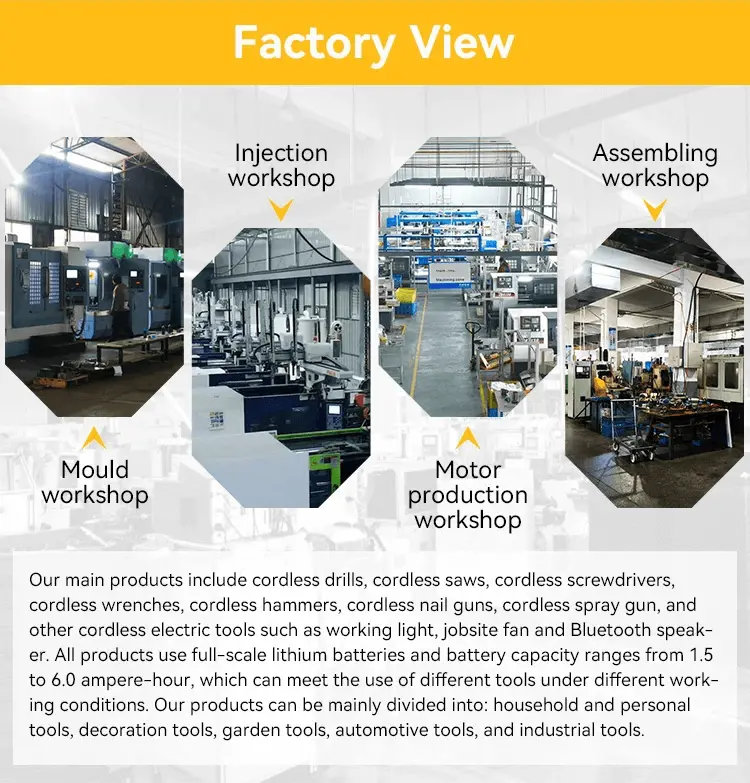
Waymore Tools is a factory-direct manufacturer of air blower with 8+ years of production experience and exports to 30+ countries. We publish our MOQ (100 units per model standard), welcome third-party inspection on every batch, and provide complete compliance documentation. If you are evaluating factories, put us on the list — and hold us to every criterion above.
Common Mistakes Wholesale Buyers Make
After working with hundreds of importers across 30+ countries, the same mistakes appear again and again. None of them are fatal — but each one silently costs margin, time, or customer trust. Here are the ones to avoid in the China/Global market.
- Chasing the lowest quote — the cheapest factory quote usually means a cut somewhere: cells, motors, or QC. Price anomalies are the most reliable predictor of quality problems.
- Skipping pre-shipment inspection — a 1–3% inspection fee protects a 100% order value. Every importer who skips it has a story.
- Ignoring certification until customs — China/Global enforcement of CE, FCC, RoHS; market-specific certification required is not theoretical. Verify compliance before production, not after.
- Stocking too many SKUs early — depth beats breadth in the first year. Master 3–5 configurations before expanding.
- Underestimating accessories — bits, blades, and batteries carry the highest margins and drive repeat orders. Missing them is leaving margin on the table.
- No warranty plan — decide who handles warranty claims before the first sale, and price for it.
Frequently Asked Questions
What is the minimum order quantity (MOQ) for wholesale air blower from China? Most professional factories, including Waymore Tools, offer MOQs of 50–100 units per model for standard products. OEM/private label orders typically start at 200–500 units depending on tool complexity and packaging. Mixed-model containers are standard practice, which lets you reach MOQ faster across several configurations.
What certifications do air blower need for the China/Global market? CE, FCC, RoHS; market-specific certification required. A professional export factory provides compliance documentation with every order and can arrange third-party testing (SGS, TÜV, Intertek) for specific market requirements. Always verify certificates before production begins — retrofitting compliance is expensive.
How long does a wholesale order take from order to delivery in China/Global? Standard lead time is 15–25 days for production after sample approval, plus 15–35 days sea freight depending on the destination port, plus 3–7 days customs clearance. Urgent orders can be air-freighted in 5–7 days total. Plan 6–10 weeks end-to-end for your first order.
Can I get OEM/private label branding on air blower? Yes. Full OEM/ODM services include your logo on the tool, custom color boxes, your-language instruction manuals, and custom packaging. OEM MOQ is 200–500 units per model depending on customization depth, with tooling costs quoted up front and amortized across your order volume.
What margins can a distributor expect on air blower in China/Global? Branded distribution returns 30–50% gross margins; parallel import improves that to 60–100%; factory-direct or private label sourcing returns 400–800% wholesale-to-retail spreads. The exact figure depends on your channel, positioning, and accessories strategy.
Do you provide samples before bulk orders? Yes. Samples are available at cost — typically $15–40 depending on the tool — shipped within 3–5 days via DHL/FedEx. The sample fee is refundable against your first bulk order. We recommend sampling 3–5 models across tiers before committing.
What payment terms do Chinese factories accept? Standard terms are T/T (30% deposit, 70% balance before shipment) or L/C for larger orders. Samples are usually paid via PayPal or Western Union. Established relationships can unlock better terms — after a few clean orders, many factories extend credit or negotiate milestone payments.
How do I handle warranty claims and spare parts? Agree on the warranty structure before signing: typical terms are 12–36 months with a defect-rate SLA (1–3% AQL). A good factory maintains spare parts stock and ships replacements quickly. At Waymore Tools, warranty is a written commitment — we stock parts for every model we produce and honor claims without friction.
Bottom Line
Sourcing air blower from China is a proven, high-margin business model when you follow the process: understand the product, verify quality, manage logistics, and partner with a factory that treats you as a long-term partner. The playbook above is exactly that process.
Waymore Tools manufactures air blower factory-direct with full OEM/ODM support, compliance documentation, and MOQ from 100 units. Whether you are launching a new product line or optimizing an existing one, our team can help you plan the right mix for the China/Global market. Contact us for samples, pricing, and a free sourcing consultation.
💼 Stock the Best — At the Right Price
Waymore Tools manufactures and supplies every product featured in this guide. Get factory-direct pricing with full compliance (CE/FCC/CSA), private labeling, and consolidated shipping to your market.
MOQ: 100 units per model · Free samples available · 3-year warranty
Sourcing next step: compare the full air blower range, or review a specific model such as the Professional Custom Portable Mini Air Blower with our export team — OEM/ODM branding, MOQ 100 units.