 WAYMORE TOOLS
Air Blower Application Guide: Leaf, Debris, Industrial, and Wholesale Selection
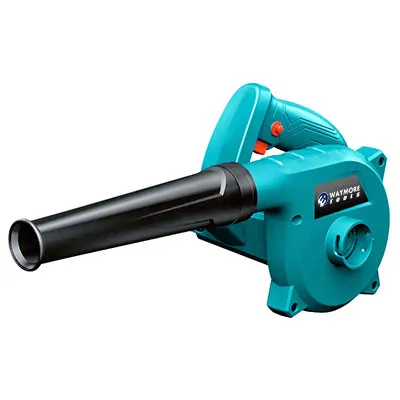
The air blower — commonly called a leaf blower — has evolved from a seasonal yard tool into a year-round essential for landscaping, commercial property ...
Air Blower Application Guide: Leaf, Debris, Industrial, and Wholesale Selection
Introduction
The air blower — commonly called a leaf blower — has evolved from a seasonal yard tool into a year-round essential for landscaping, commercial property maintenance, and industrial cleaning. With advances in battery technology, noise reduction, and air volume engineering, blowers now serve applications far beyond autumn leaf cleanup. For wholesalers, the blower category offers strong seasonal volume, steady accessory demand, and a clear transition from gas to battery that mirrors broader power tool trends.
This guide covers handheld, backpack, and industrial blower types, application-specific selection, airflow fundamentals, and strategic wholesale purchasing considerations.
Part 1: Blower Types and Power Sources
1.1 Handheld Blowers
The most common form factor. The engine or motor is mounted on a tube with the fan/impeller at one end and the nozzle at the other.
Power Source Comparison:
| Power Source | Weight | Typical Air Volume | Runtime/Operation | Best For |
|---|---|---|---|---|
| Corded electric | 4-7 lbs | 250-450 CFM | Unlimited (cord) | Small yards, garages, workshops — tether accepted |
| Cordless battery (18-36V) | 5-8 lbs | 350-550 CFM | 15-30 min per charge | Medium yards, curbside, parking lots |
| Cordless battery (40-80V) | 7-12 lbs | 450-700 CFM | 20-50 min per charge | Large yards, light commercial |
| Gas (2-stroke) | 8-12 lbs | 450-600 CFM | 45-90 min per tank | Commercial (power needed), remote areas |
| Gas (4-stroke) | 10-15 lbs | 500-700 CFM | 60-120 min per tank | Commercial (quieter, less fumes) |
Key Specifications to Know:
- CFM (Cubic Feet per Minute): Air volume — how much air is moved. More CFM = clearing larger areas faster.
- MPH (Miles per Hour): Air speed — how fast the air moves. More MPH = moving heavier materials.
- Newtons (N): A combined metric (CFM × MPH / constant). Better single-number comparison than CFM or MPH alone. Look for 10-15N range in handheld, 20-30N in backpack.
Wholesale Insight: Cordless handheld blowers now outsell gas handheld in most markets. The tipping point was around 2022 when battery technology delivered sufficient runtime for typical residential use. High-voltage platforms (40V+) are the growing segment.
1.2 Backpack Blowers
A larger blower carried on the user's back via shoulder straps, connected to the nozzle tube by a flexible hose.
Power Source Comparison:
| Type | Weight | Air Volume | Runtime | Best For |
|---|---|---|---|---|
| Gas backpack (2-stroke) | 20-28 lbs | 600-950 CFM | 1-3 hours per tank | Commercial landscaping — maximum power and runtime |
| Gas backpack (4-stroke) | 22-30 lbs | 650-1,000 CFM | 1.5-4 hours per tank | Commercial — lower emissions, quieter |
| Battery backpack | 15-25 lbs (with batteries) | 500-800 CFM | 1-4 hours (hot-swap batteries) | Commercial — silent operation, zero emissions |
Advantages over Handheld:
- Higher CFM and MPH (significantly more cleaning power)
- Better weight distribution (25 lbs on back vs. 10-12 lbs on arm)
- Lower vibration to hands and arms
- Longer runtime (larger fuel tank or multiple batteries)
- Reduced user fatigue during multi-hour operation
When to Recommend Backpack:
- Professional landscaping crews (daily use, large properties)
- Commercial property maintenance (apartment complexes, campuses)
- Stadiums, golf courses, parks and recreation
- Municipal leaf collection programs
- Any user working 3+ hours per session
Wholesale Insight: Backpack blowers are the professional's tool. They command higher prices ($200-600 wholesale) and lower volume, but better margins. A pro landscaping crew might buy 2-5 backpack blowers annually per truck.
1.3 Industrial and Specialty Blowers
Beyond landscaping, air blowers serve a range of industrial applications.
Type: Walk-Behind Blowers
- Gas or electric (small engine + wheeled chassis)
- 1,500-3,000+ CFM
- Used for: Large parking lots, construction site cleanup, stadiums
- Wholesale note: Niche but high-value ($500-2,000+ wholesale)
Type: Dust Collection Blowers (Workshop)
- Typically corded electric
- 400-800 CFM with fine filtration
- Used for: Shop dust collection, sawdust removal, debris clearing
- Key feature: Connects to a dust collection bag or system
Type: Compressed Air Blowers (Pneumatic)
- Require compressed air supply
- 50-500 CFM (air consumption)
- Used for: Manufacturing line cleaning, electronics dusting, food processing equipment blow-off
Type: ATV/UTV-Mounted Blowers (PTO or hydraulic)
- 2,000-5,000+ CFM
- Used for: Large acreage leaf management, turf management, farm cleanup
- Very niche — sold through agricultural equipment channels
Part 2: Application-Specific Guide
2.1 Leaf and Yard Debris (Residential)
Tool Selection:
| Yard Size | Recommended Blower |
|---|---|
| Small (< 1/4 acre) | Corded or 18V cordless handheld |
| Medium (1/4 - 1/2 acre) | 40V+ cordless handheld |
| Large (1/2 - 1 acre) | 60V+ cordless or gas handheld |
| Estate (> 1 acre) | Backpack blower (gas or battery) |
Technique:
- Work from the property edges inward
- Blow with the wind, not against it
- For wet leaves: increase MPH (concentrate the nozzle) rather than CFM
- Mulch leaves as you blow with multi-function models that have a vacuum/mulch mode
- Use a blower on the lawn before mowing — lifts grass and removes surface debris
Seasonal Use Pattern:
| Season | Primary Blower Task |
|---|---|
| Spring | Winter debris, mulch clearing, pollen removal |
| Summer | Grass clippings, driveway/patio sweeping |
| Fall | Leaf collection — peak season (60%+ of annual blower use) |
| Winter | Light snow removal (specialty snow mode or dedicated blower) |
2.2 Commercial and Property Maintenance
| Application | Recommended Tool | Frequency | Notes |
|---|---|---|---|
| Parking lot sweeping | Backpack gas or walk-behind | Weekly | Best before rain to keep drains clear |
| Sidewalk/curb cleanup | Backpack or handheld | Daily (hotels, retail) | High visibility area |
| Mulch and gravel bed cleanup | Handheld variable speed | Weekly | Low speed to avoid displacing gravel |
| Stadium/arena cleaning | Walk-behind or multiple backpack | Event-based | Efficiency is key — large area |
| Construction dust | Workshop blower or HEPA vacuum | During/after work | Dust control — not leaf clearing |
| Golf course maintenance | Backpack blower | Daily | Low noise preferred (early morning) |
Commercial Buyer Priorities:
- Reliability — tools used daily must start every time
- Runtime — continuous operation for 2-4 hour shifts
- Noise level — noise ordinances in many municipalities are tightening
- Serviceability — easy maintenance, available parts
- Crew ergonomics — low vibration, comfortable harness for multi-hour use
2.3 Industrial and Specialty Applications
| Application | Blower Type | Key Requirements |
|---|---|---|
| Food processing washdown | Pneumatic air knife | Stainless steel, IP69K, washdown-safe |
| Electronics assembly cleaning | Anti-static compressed air | Ionization, ESD-safe nozzle |
| Manufacturing line blow-off | Centrifugal blower | Continuous duty, filtration |
| Warehouse floor cleaning | Walk-behind sweeper + blower | Large debris pickup |
| Concrete surface prep | Industrial blower | High CFM for drying and dust removal |
| Drain/sewer clearing | Vented blower (sewer specific) | Small profile, high velocity |
Part 3: Technical Specifications Explained
CFM vs. MPH vs. Newtons — What Matters?
For volume clearing (leaves, grass, light debris): CFM matters most. You need volume of air to move material in bulk. A high-CFM blower clears a driveway faster even at moderate speed.
For stuck material (wet leaves, gravel, pine needles): MPH matters more. You need velocity to dislodge material from surfaces and blow it along.
The Newton measurement combines both in a single figure: Force (N) = k × CFM × MPH. The higher the Newton, the more effective the blower. Most good backpack blowers exceed 20N.
| Blower Type | Typical CFM | Typical MPH | Typical Force (N) |
|---|---|---|---|
| Corded handheld | 250-400 | 140-200 | 8-12N |
| 40V cordless handheld | 400-550 | 130-180 | 10-14N |
| Gas handheld 2-stroke | 450-600 | 170-220 | 13-18N |
| Battery backpack | 500-750 | 140-180 | 14-20N |
| Gas backpack 2-stroke | 650-950 | 180-230 | 18-28N |
| Gas backpack 4-stroke | 700-1,000 | 190-240 | 20-30N |
| Walk-behind | 1,500-3,000 | 100-160 | 25-45N |
Variable Speed vs. Trigger Control
| Control Type | Advantage | Best For |
|---|---|---|
| Fixed speed (2-speed) | Simple, lower cost, fewer electronics | Budget users |
| Variable speed (dial/trigger) | Precision control — use low speed near gardens, high for open areas | All — preferred by pros |
| Cruise control (set + forget) | Maintains constant RPM without holding the trigger | Commercial (reduces fatigue) |
Wholesale Tip: Variable speed is now standard on almost all blowers above entry-level. Cruise control is a differentiator for backpack blowers — if you have two similar blowers at different price points, cruise control justifies a 15-25% premium.
Noise Level (Critical Regulatory Issue)
Noise is the defining regulatory issue for blowers in 2024-2025:
| Sound Level | Examples |
|---|---|
| 55-60 dB | Most cordless blowers (low speed) |
| 60-70 dB | Most cordless blowers (high speed) |
| 70-80 dB | Gas 4-stroke (at operator ear) |
| 80-90 dB | Gas 2-stroke, some battery backpack |
| 90-100 dB | Gas 2-stroke (older models, no muffler) |
Regulatory Trends:
- California (2024): Many municipalities ban gas-powered leaf blowers. Over 100 cities have restrictions.
- EU: Stage V emissions regulations increasingly restrict small engines. Battery adoption is accelerating.
- Noise ordinances: 65 dB at property line is common in residential zones.
- Green zone compliance: Some HOA and municipality contracts require electric/battery-only equipment.
Wholesale Impact: If you serve urban/suburban customers in regulated markets, go heavy on cordless/battery blowers and minimize gas inventory. If you serve rural/farm markets, gas still sells.
Part 4: Wholesale Buyer Selection Guide
Inventory Strategy by Market Segment
| Segment | Primary Blower Type | Annual Unit Volume | Profit Margin | Seasonality |
|---|---|---|---|---|
| DIY/Homeowner (suburban) | Cordless handheld (40-60V) | High | 25-35% | Fall peak, spring secondary |
| DIY/Homeowner (rural) | Gas handheld | Medium | 20-30% | Fall peak |
| Commercial landscaping | Gas/battery backpack | Medium-high | 30-40% | Spring-Fall (stable) |
| Property management | Mix: backpack + walk-behind | Low-medium | 30-40% | Year-round |
| Industrial/maintenance | Specialty blowers | Low | 35-50% | Year-round (project-driven) |
Recommended Starting Product Mix
| Tier | Model Type | Wholesale Price | Suggested SKUs |
|---|---|---|---|
| Entry | Cordless handheld (18-36V) | $25-60 | 2-3 models |
| Mid | Cordless handheld (40-60V) | $60-120 | 2-3 models |
| Mid | Gas handheld (2-stroke) | $50-100 | 1-2 models |
| Pro | Cordless backpack | $150-300 | 1-2 models |
| Pro | Gas backpack (2-stroke) | $150-350 | 2-3 models |
| Premium | Gas backpack (4-stroke) | $250-500 | 1 model |
| Industrial | Walk-behind | $400-1,200 | 1 model |
Battery Platform Considerations
If you're stocking cordless blowers, battery compatibility matters:
- Same voltage, same brand: All cordless blowers from one brand should use the same battery platform
- Cross-platform: Avoid mixing battery systems within a brand unless they offer multi-platform chargers
- Backpack battery: Consider offering extra battery kits (1 or 2 extra batteries + charger) — many buyers want a "run all day" setup
Battery Recommendations:
- Residential: 4.0-6.0 Ah batteries (1 in tool, best with 1 spare)
- Commercial backpack: 6.0-12.0 Ah, system-level (often twin batteries in backpack)
Accessories and Consumables
| Accessory | Margin | Demand | Notes |
|---|---|---|---|
| Replacement batteries | 25-35% | High | Essential for cordless |
| Fast chargers (multi-port) | 25-35% | Medium | Upsell with tool |
| Nozzle attachments | 40-55% | Medium | Flat nozzle (beyond stiff bristles) |
| Shoulder strap/harness | 40-55% | Medium | Aftermarket comfort upgrade |
| Storage cover | 45-60% | Low-Medium | Seasonal accessory |
| Fuel mixing bottle (gas) | 35-50% | Medium | 2-stroke owners need these |
| Spark plugs, air filters (gas) | 40-55% | Medium | Regular replacement items |
Conclusion
The air blower market is in the middle of a historic transition from gas to battery. For wholesalers, this creates both challenge and opportunity:
- Battery is the future — particularly in regulated urban markets. Stock cordless blowers across price points.
- Gas is stable for commercial — professional backpack users value power and runtime. Gas backpack isn't disappearing soon.
- Know your local regulations — noise and emissions laws directly affect which blowers you should stock.
- Accessories drive margin — batteries, chargers, nozzles, and service parts generate ongoing revenue.
- Seasonal planning matters — order blowers for fall delivery by June or July.
Ready to Stock Premium Air Blowers?
Waymore Tools delivers a comprehensive range of air blowers for every application — from handheld cordless leaf blowers to industrial walk-behind units:
- Cordless leaf blowers: 18V to 80V with brushless motors
- Gas leaf blowers: 2-stroke and 4-stroke handheld and backpack
- Industrial blowers: Walk-behind, dust collection, and specialty models
- Complete accessories: Batteries, chargers, nozzle kits, maintenance parts
- OEM/ODM services: Custom specifications, branding, and packaging
- Quality certified: CE, ETL, RoHS — meeting global standards
[Contact Waymore Tools] for a wholesale air blower catalog and volume pricing. Blow through the competition with reliable equipment.
This guide is part of the Waymore Tools Product Application Guide series. For more application-specific guides, visit our resources page.
Grow Your Business with Waymore Tools
Direct factory pricing with professional quality. ISO 9001 certified, CE/FCC approved.
MOQ: 100 sets | Samples Available
Sourcing next step: compare the full air blower range, or review a specific model such as the Professional Custom Portable Mini Air Blower with our export team — OEM/ODM branding, MOQ 100 units.