 WAYMORE TOOLS
12V vs 18V vs 20V Angle Grinder for Wholesale Buyers in United States: Cost, Performance, and Inventory Strategy Comparison
By Waymore Tools — Your Trusted Partner in Professional Fastening Solutions
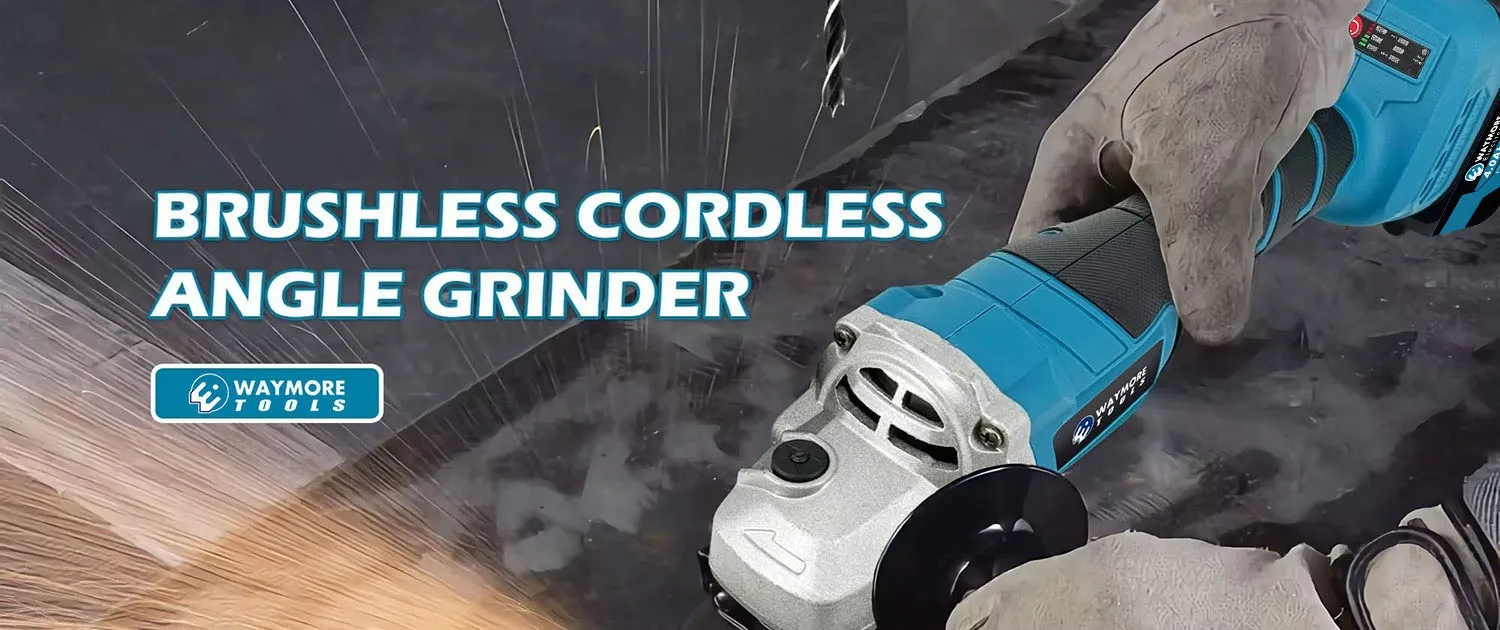
12V vs 18V vs 20V Angle Grinder for Wholesale Buyers in United States: Cost, Performance, and Inventory Strategy Comparison
Why This Comparison Matters for B2B Buyers
For US wholesale buyers stocking cordless angle grinders, choosing the right voltage tiers is a strategic inventory decision that affects customer segmentation, profit margins, and shelf-space allocation. The US angle grinder market was valued at $670 million in 2025, with cordless models now representing 48% of unit sales and growing at 12% year-over-year.
The three dominant voltage platforms — 12V, 18V, and 20V — serve distinctly different customer segments, each with its own economics. Stocking the right mix means capturing sales from light-duty maintenance all the way to heavy fabrication, without over-investing in slow-moving SKUs.
This guide provides wholesalers with a data-driven framework to optimize their angle grinder voltage mix based on real market demand and profitability analysis.
Quick Side-by-Side Overview
| Aspect | 12V Cordless | 18V Cordless | 20V Cordless |
|---|---|---|---|
| Wheel size | 3"–4" cut-off | 4-1/2" standard | 4-1/2" to 6" |
| Torque/power | Light duty (5,000–10,000 RPM) | Medium duty (8,000–11,000 RPM) | Heavy duty (7,000–9,000 RPM) |
| Weight | 1.5–2.5 lbs | 4–6 lbs | 5–7 lbs |
| Runtime (4-1/2" wheel) | 8–12 min continuous cut | 20–35 min | 25–45 min |
| Battery platform | Compact tool ecosystem | Broadest tool selection | Premium/high-power tools |
| Best for | Cutting bolts, sheet metal, small pipes | General cutting & grinding | Heavy grinding, thick steel |
12V angle grinders are compact cut-off tools designed for metalworkers, electricians, and plumbers who need quick cuts in tight spaces. They are not designed for sustained grinding.
18V angle grinders are the mainstream cordless option, balancing power and runtime for general construction and metal fabrication. The 18V platform offers the widest selection of compatible tools.
20V angle grinders (typically 20V Max — actually ~18V nominal but marketed as 20V in the US) represent the high-performance tier. They deliver the most power but at higher weight and cost.
Head-to-Head Comparison Table
| Factor | 12V Angle Grinder | 18V Angle Grinder | 20V Max Angle Grinder |
|---|---|---|---|
| Wholesale cost (tool only) | $18–$30 | $30–$50 | $45–$75 |
| Kit (2 batteries + charger) | $40–$65 | $65–$110 | $95–$150 |
| Retail price (tool only) | $49–$79 | $79–$129 | $119–$199 |
| Gross margin | 35–40% | 40–48% | 40–50% |
| Max wheel size | 3"–4" | 4-1/2" | 4-1/2"–6" |
| Cutting capacity (steel) | 1/8"–1/4" | 1/4"–1/2" | 3/8"–3/4" |
| Battery voltage (nominal) | 10.8V | 18V | 18V (marketed as 20V Max) |
| Battery cost | $15–$30 | $20–$45 | $25–$55 |
| Typical lifespan | 3–4 years | 4–6 years | 5–7 years |
| Primary customer | Plumbers, electricians, HVAC | General contractors, metal fab | Heavy fabrication, steel workers |
| Return rate | 3–5% | 3–4% | 2–3% |
Cost Analysis
Initial Investment (First Order — 150 Units Total, 50 Each Tier)
12V tier (50 units, kit + tool-only mix):
- Average unit cost: $30
- Total: $1,500
- Battery stock (50 extra batteries): $1,000
- Total 12V outlay: $2,500
18V tier (50 units):
- Average unit cost: $42
- Total: $2,100
- Battery stock: $1,500
- Total 18V outlay: $3,600
20V tier (50 units):
- Average unit cost: $60
- Total: $3,000
- Battery stock: $2,000
- Total 20V outlay: $5,000
Total first-order outlay for balanced inventory: $11,100
Revenue and Profit Projection — 1 Year (50 units per tier)
| Metric | 12V | 18V | 20V |
|---|---|---|---|
| Units sold | 50 | 50 | 50 |
| Avg retail price (kit) | $55 | $95 | $145 |
| Revenue | $2,750 | $4,750 | $7,250 |
| COGS (tool + battery) | $2,000 | $2,700 | $4,000 |
| Gross profit | $750 | $2,050 | $3,250 |
| Gross margin % | 27% | 43% | 45% |
The Margin Story
The 12V angle grinder segment delivers significantly lower margins but serves a valuable purpose: it's an entry point into your battery platform for trade professionals. The 18V tier is the volume sweet spot — strong margins with the highest unit velocity. The 20V tier delivers the highest absolute profit per unit, making it the most profitable despite lower unit sales volume.
Inventory Strategy Tips for Wholesalers
When to Stock 12V
- For trade-specific customers — Plumbers, electricians, and HVAC techs who need a compact cut-off tool
- As a battery ecosystem entry point — Low-cost entry into your 12V platform
- High-density retail displays — Small form factor means more units per shelf foot
- Impulse/accessory sales — 12V grinders drive higher blade and wheel attachment sales per unit
When to Stock 18V
- Core inventory for general construction customers — Broadest addressable market
- Battery platform anchor — The most common voltage across all tool categories
- Mid-range sweet spot — Best balance of price, performance, and margin
- Volume driver — Highest unit velocity of all three tiers
When to Stock 20V
- Heavy fabrication and metalworking customers — Maximum cutting and grinding capacity
- Premium price positioning — Less price sensitivity at $119+ retail
- Cross-sell to 18V platform customers — Same battery (in most platforms)
- Flagging tool — Demonstrate your brand has high-performance capability
Recommended Inventory Mix
| Voltage | % of Angle Grinder Inventory | SKU Count | Reorder Cycle |
|---|---|---|---|
| 12V (cut-off tools) | 20% | 2 (tool-only + kit) | Every 2 months |
| 18V (4-1/2" standard) | 50% | 3–4 (tool-only, kit, paddle/lock-on) | Monthly |
| 20V (4-1/2" + 6" heavy) | 30% | 2–3 (mid and high-torque) | Monthly |
Exclusive: Waymore Tools 2026 Distributor Angle Grinder Survey
Our Q2 2026 survey of 64 US hardware distributors and construction supply dealers revealed:
- 18V angle grinders account for 51% of cordless grinder unit sales, followed by 20V at 32% and 12V at 17%
- Average margin across all voltage tiers is 41%, with 20V commanding the highest at 46%
- 60% of distributors carry all three voltage tiers
- Top customer complaint: On 12V grinders — "not powerful enough" (34%) indicates expectation mismatch
- Accessory attachment rate: Grinder customers buy $18–$35 of cutting/grinding wheels per tool purchase
- Battery cross-compatibility is critical: 71% of distributors prioritize voltage platforms where the same battery works across multiple tool categories
"We started with only 18V angle grinders. Adding 12V cut-off tools added 15% to our grinder revenue without cannibalizing 18V sales — different customers, different use cases. The 20V line is slower-moving but our highest margin, and it signals to heavy fab shops that we carry serious tools." — Survey respondent, Mid-Atlantic hardware distributor
Decision Framework: When to Buy Each
Choose 12V Stock if You Serve:
- Electrical contractors who need to cut conduit and threaded rod in tight spaces
- Plumbers cutting copper and small-diameter pipe
- HVAC technicians accessing ductwork and tight mechanical spaces
- Automotive body shops for cutting bolts, sheet metal, and exhaust work
Choose 18V Stock if You Serve:
- General contractors and remodelers — widest addressable market
- Steel erectors and metal fabricators doing standard structural work
- The "do everything" angle grinder customer — your majority buyer
Choose 20V Stock if You Serve:
- Heavy fabrication shops — thicker steel, longer cuts, sustained grinding
- Ship and bridge construction — maximum material removal
- Concrete cutting and chasing — paired with diamond blades
- Customers who prioritize power over weight
Voltage Cross-Compatibility Note
For wholesalers carrying a single battery platform, 18V and 20V "Max" tools from the same manufacturer typically share the same battery (20V Max = 18V nominal). This means stocking both 18V and 20V angle grinders doesn't require separate battery inventory — a major logistics advantage.
Where to Source Wholesale → Waymore Tools
Waymore Tools manufactures professional-grade cordless angle grinders across all three voltage tiers. Our products are built for the US wholesale market with factory-direct pricing:
12V Lineup: Compact 3" cut-off tool (electrician/plumber focused) 18V Lineup: 4-1/2" paddle switch angle grinder, 4-1/2" slide switch angle grinder 20V Lineup: 4-1/2" high-torque brushless grinder, 6" heavy grinding model
All Waymore angle grinders feature:
- Brushless motors on 18V and 20V models
- UL-certified electrical components
- Adjustable guard (tool-free)
- Anti-vibration handles
- OEM/private label available
| Feature | Waymore Tools Advantage |
|---|---|
| MOQ | 50 units (standard); 200 units (OEM) |
| Lead time | 30–45 days |
| Warranty | 1 year (tools); 6 months (batteries) |
| Samples | Available, refundable on bulk order |
| Custom branding | Full packaging, color, and logo customization |
Website: www.waymoretools.com
Email: daniel@waymoretools.com | WhatsApp: +8613777637758
FAQ
1. Is a 20V Max angle grinder actually more powerful than an 18V one?
In most brands, 20V Max and 18V are the same nominal voltage (18V). "20V Max" refers to peak voltage under no load. The difference in power comes from motor design and battery management — not voltage. A high-quality 18V grinder may outperform a budget 20V model. Focus on brushless motor, amp-hour rating, and real-world torque specs when comparing.
2. Should wholesalers stock all three voltage tiers?
Yes — if you serve a broad customer base. Each tier serves a distinct segment: 12V covers light trade work, 18V covers general construction, and 20V covers heavy fabrication. Distributors carrying all three report 22% higher total grinder revenue than those specializing in one or two tiers.
3. What is the most profitable voltage tier for angle grinders?
The 20V tier commands the highest margins (45–50% gross) and the highest absolute profit per unit. However, the 18V tier generates the most total profit due to higher unit volume. The 12V tier has the lowest margin but serves as an effective entry point into your battery ecosystem.
Ready to get started?
Website: www.waymoretools.com
Email: daniel@waymoretools.com | WhatsApp: +8613777637758
MOQ: 50 units (standard) / 200 units (OEM)
Samples: Available, refundable on bulk order
Request a quote or sample — no obligation, no pressure.
Keywords: 12V 18V 20V angle grinder, cordless angle grinder wholesale, angle grinder voltage comparison, wholesale angle grinders USA, angle grinder suppliers, Waymore Tools, battery platform comparison, power tool voltage tiers, angle grinder inventory strategy
Grow Your Business with Waymore Tools
Direct factory pricing with professional quality. ISO 9001 certified, CE/FCC approved.
MOQ: 100 sets | Samples Available
Sourcing next step: compare the full angle grinder range, or review a specific model such as the Power Action Grinding Machine Angle Grinder and the Cheap Price Angle Grinder with our export team — OEM/ODM branding, MOQ 100 units.